Foundations of Punjabi Cuisine
When people think of rich curries, buttery flatbreads, and hearty family meals, they are often thinking about Punjabi Cuisine.
Rooted in the fertile lands of Punjab, this regional food tradition plays a major role in shaping the broader identity of Pakistani Cuisine. If you explore the main guide to Pakistani Cuisine (internal pillar link), you’ll see how regional diversity strengthens the national food culture. Among all provinces, Punjab contributes some of the most widely recognized and comforting dishes.
But Punjabi Cuisine is more than just heavy gravies and butter. It reflects:
- Agricultural abundance
- Rural cooking traditions
- Strong community culture
- Seasonal eating habits
To understand it properly, we must begin with geography.
The Agricultural Influence Behind Punjabi Cuisine
Punjab is known as the breadbasket of Pakistan. Wheat fields, dairy farms, and vegetable crops dominate the region. Because of this agricultural richness, the food developed around:
- Fresh wheat-based breads
- Milk, butter, and ghee
- Seasonal vegetables
- Lentils and legumes
- Meat cooked for large families
Unlike coastal or mountainous regions, Punjab’s fertile plains allowed for generous cooking. Portions are large, meals are shared, and hospitality is central.
This agricultural backbone is one reason Punjabi Cuisine feels hearty and satisfying.
Core Characteristics of Punjabi Cuisine
Before diving into individual dishes, it’s helpful to understand what defines this regional style.
Richness and Comfort
Many dishes use:
- Butter (makhan)
- Ghee
- Cream
- Yogurt
These ingredients create thick textures and smooth gravies.
However, richness does not mean excessive spice. Punjabi Cuisine balances warmth with depth.
Bread-Centered Meals
Unlike some regions that rely heavily on rice, Punjabi meals often revolve around:
- Roti
- Naan
- Paratha
- Makki di roti
Rice is present, but wheat dominates daily meals.
Slow-Cooked Gravies
Curries are often simmered slowly to allow flavors to develop.
Onions are browned deeply, tomatoes are cooked until oil separates, and spices are layered carefully. This technique aligns with foundational methods explained in the broader Pakistani Cuisine pillar (internal anchor).
Seasonal Eating
Winter foods differ from summer foods.
For example:
- Winter: Saag, gajar ka halwa
- Summer: Lassi, lighter lentil dishes
Seasonal cooking is deeply respected in Punjabi households.
Iconic Dishes in Punjabi Cuisine
Let’s explore some of the most loved and widely prepared dishes.
Saag and Makki di Roti


One of the most traditional winter meals.
Saag is made from mustard greens slow-cooked with spices and blended into a thick paste. It is served with makki di roti (corn flatbread) and topped with butter.
Helpful tip:
Cook greens slowly and allow natural thickening. Over-blending removes traditional texture.
This dish represents rural Punjabi Cuisine at its most authentic.
Lahori Charga


A whole chicken marinated in spices, steamed until tender, then deep-fried until crispy.
Why it stands out:
- Double cooking technique
- Crispy outside
- Juicy interior
- Strong spice coating
Lahori Charga is often served at weddings and festive gatherings.
Punjabi Chole


Chole is a thick chickpea curry flavored with garam masala and sometimes tamarind.
It is:
- Vegetarian
- Protein-rich
- Budget-friendly
- Full of flavor
Often served with naan or bhature.
Butter Chicken (Murgh Makhani – Pakistani Style)
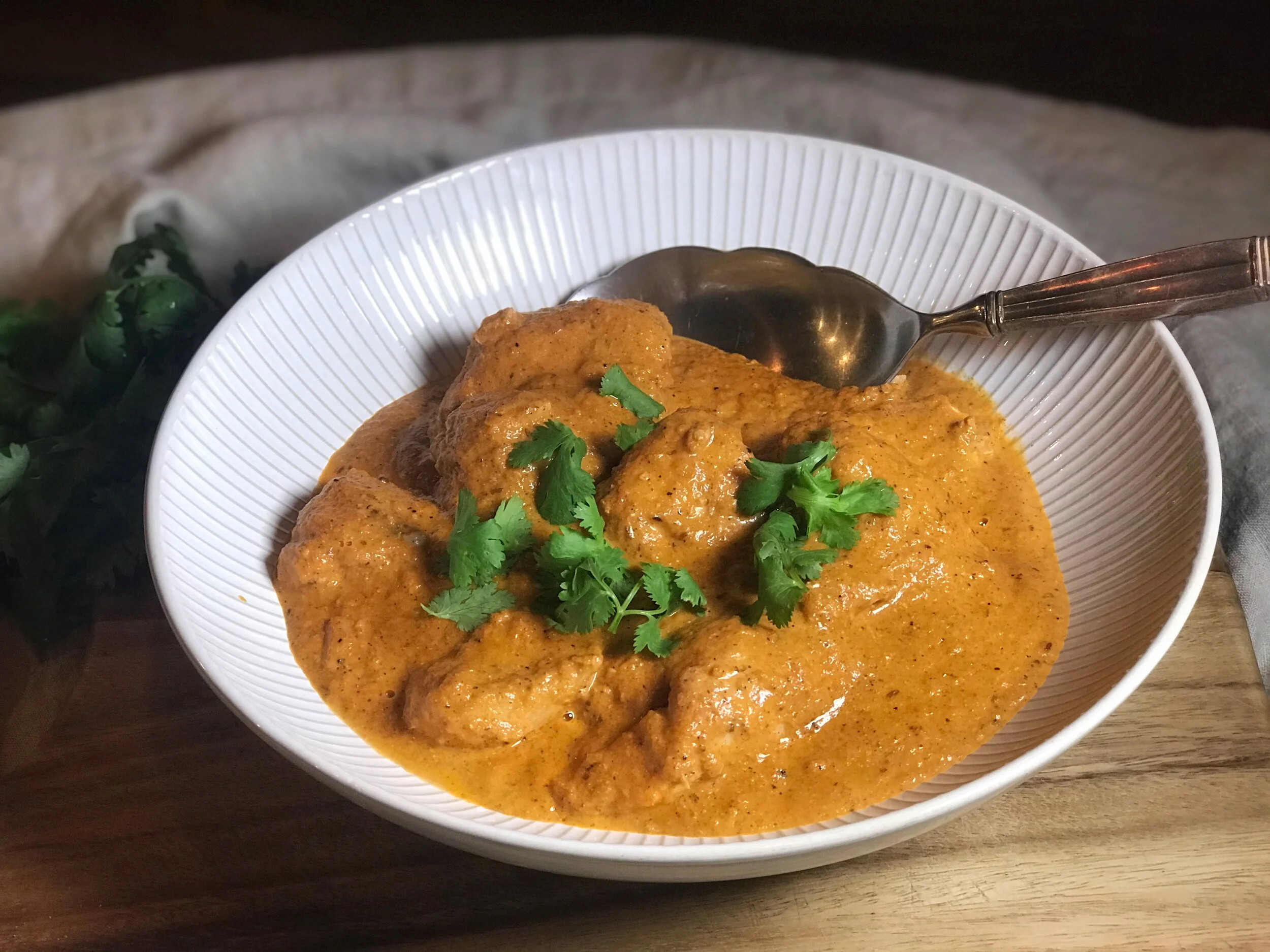

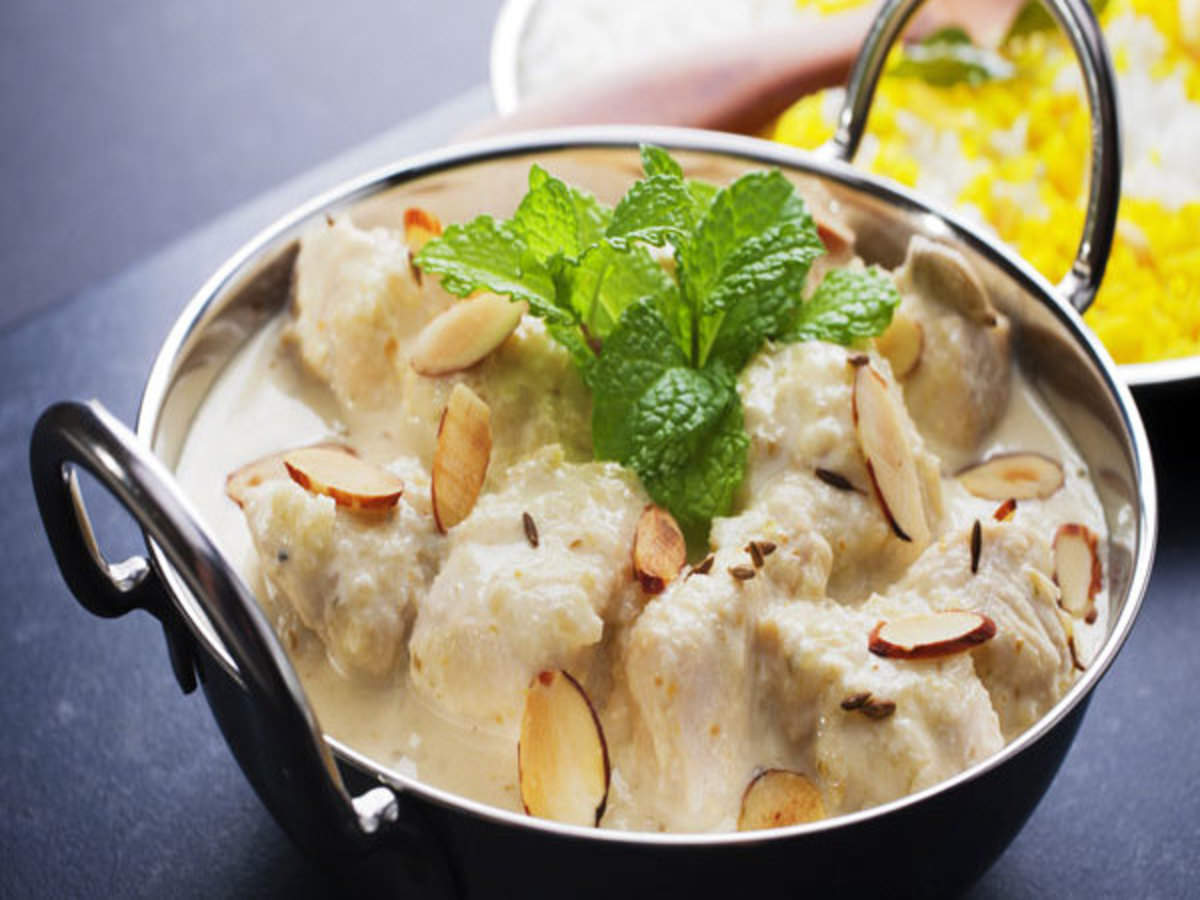
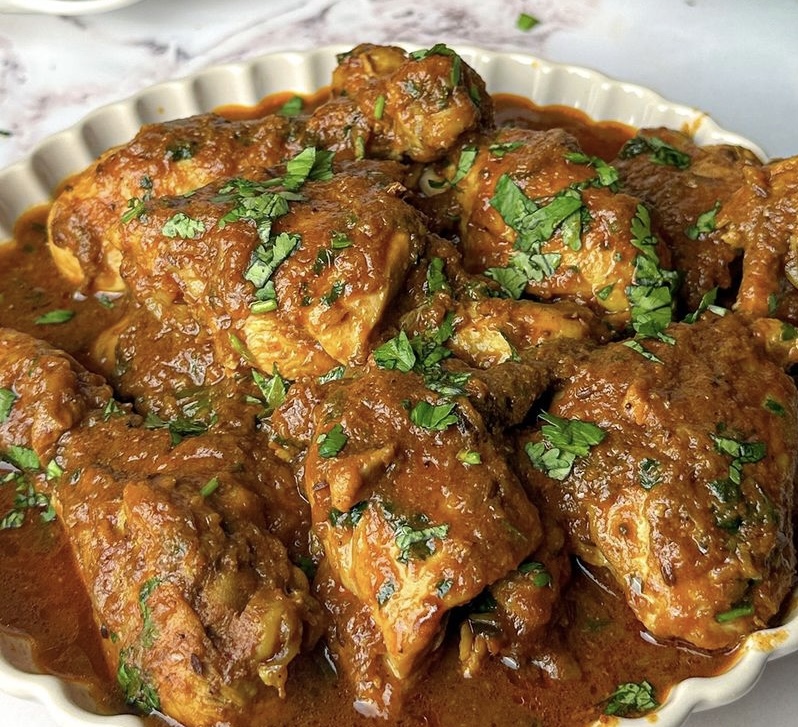
While variations exist across borders, creamy tomato-based chicken curries are a major part of Punjabi Cuisine.
The key elements:
- Tomato-based gravy
- Butter or cream
- Mild spice
- Slow simmering
Everyday Meals in Punjabi Homes
Not every meal is celebratory. Daily Punjabi Cuisine often includes:
- Daal with roti
- A vegetable curry
- Yogurt
- Fresh salad
These simple meals reflect balance rather than indulgence.
Cooking Techniques Used in Punjabi Cuisine
Some essential techniques include:
Bhunna (Masala Roasting)
Onions and tomatoes are cooked until oil separates.
Dum (Steam Cooking)
Used occasionally in rice or meat dishes.
Tarka (Tempering)
Common for lentils.
These techniques are shared across Pakistani Cuisine, but Punjabi kitchens often use more dairy and ghee.
Why Punjabi Cuisine Is So Popular
It is:
- Comforting
- Accessible
- Ingredient-friendly
- Family-oriented
Restaurants worldwide frequently feature Punjabi-style curries because they are rich, flavorful, and crowd-pleasing.
Traditional Punjabi Breakfast Traditions
Breakfast plays an important role in Punjabi Cuisine. Unlike light continental breakfasts, Punjabi mornings are often hearty and energizing — especially in rural areas where physical labor is common.
A traditional Punjabi breakfast may include:
- Paratha with butter
- Yogurt or lassi
- Chole
- Halwa
- Boiled eggs or omelet
These meals are filling and designed to sustain energy throughout the day.
If you explore the broader food culture inside Pakistani Cuisine , you’ll notice how regional breakfast styles vary significantly. Punjabi Cuisine stands out for richness and generosity even at the start of the day.
Halwa Puri – The Weekend Favorite


One of the most beloved breakfast combinations in Punjabi Cuisine is halwa puri.
It includes:
- Deep-fried puri bread
- Sweet semolina halwa
- Spiced chickpea curry
This meal is especially popular on weekends and festive mornings.
Helpful tip:
Balance sweetness and spice. The halwa should not overpower the savory chana.
Lassi – The Signature Drink


No discussion of Punjabi Cuisine is complete without lassi.
It is a yogurt-based drink served either:
- Sweet
- Salted
- Or lightly flavored
In summer, lassi helps cool the body and aid digestion.
Punjab’s dairy abundance explains why yogurt-based drinks are so central to daily meals.
Street Food in Punjabi Cuisine
Street food is a vibrant expression of regional identity.
Punjabi Cuisine offers a wide range of affordable and flavorful street dishes.
Some popular options include:
- Samosa
- Pakora
- Chaat
- Bun kabab
Street food culture connects closely to the wider food traditions of Pakistani Cuisine, where communal eating and market culture play a significant role.
Samosa and Pakora


These snacks are especially popular during:
- Rainy days
- Ramadan evenings
- Tea time gatherings
They are deep-fried and served with mint chutney or tamarind sauce.
Helpful tip:
Use medium heat while frying to ensure crispy texture without burning.
Meat Dishes That Define Punjabi Cuisine
While vegetarian dishes are common, meat holds a central place in Punjabi Cuisine.
Especially during gatherings, weddings, and festivals, meat dishes dominate the table.
Mutton Karahi


A thicker and richer variation compared to some regional styles.
It focuses on:
- Deep tomato masala
- Fresh ginger
- Green chilies
- Slow cooking
The key is proper bhunna — allowing oil to separate fully before serving.
Seekh Kebabs


Minced meat mixed with spices and grilled over open flame.
They are:
- Smoky
- Juicy
- Served with naan or chutney
Grilling adds a distinct flavor that enhances Punjabi Cuisine’s richness.
Festive Dishes in Punjabi Cuisine
Celebrations demand special dishes.
During weddings or Eid, Punjabi households often prepare:
- Biryani
- Qorma
- Pulao
- Kheer
These dishes align with traditions discussed in the broader Pakistani Cuisine pillar (internal anchor), where food and celebration are deeply connected.
Home-Style Everyday Cooking
Not all Punjabi Cuisine is heavy.
Daily meals are usually simpler:
- Daal with roti
- Seasonal vegetable curry
- Yogurt
- Salad
These meals provide balance and nutrition without excessive richness.
Cooking Fats in Punjabi Cuisine
Traditional kitchens often use:
- Ghee
- Butter
- Mustard oil
However, modern households sometimes reduce fat levels for health reasons.
Understanding this balance helps maintain authenticity while adapting to contemporary lifestyles.
Why Punjabi Cuisine Remains Globally Popular
Punjabi Cuisine has gained worldwide recognition because it is:
- Flavorful but approachable
- Rich yet comforting
- Adaptable to restaurant settings
- Ingredient-friendly
Many Pakistani restaurants internationally serve primarily Punjabi-style dishes due to their broad appeal within Pakistani Cuisine.
How to Cook Punjabi Cuisine at Home
By now, you understand the flavors, breakfast traditions, street food, and festive meals that define Punjabi Cuisine. Now let’s focus on practical cooking guidance so you can confidently prepare these dishes at home.
Punjabi food may look complex, but most recipes follow a consistent structure. Once you master the fundamentals, you can cook a wide range of dishes without memorizing dozens of recipes.
If you need a broader overview of foundational techniques shared across regions, revisit the main Pakistani Cuisine pillar (internal link), where core cooking methods are explained in depth.
The Essential Punjabi Curry Base
Many gravies in Punjabi Cuisine follow this simple structure:
- Heat ghee or oil
- Add whole spices (cumin, bay leaf, cardamom)
- Brown onions deeply
- Add ginger-garlic paste
- Add tomatoes
- Cook until oil separates
- Add powdered spices
- Add meat or vegetables
- Simmer slowly
This process is called bhunna — slowly roasting the masala until fully developed.
If you rush this step, the dish will taste raw or flat.
Helpful tip:
Cook onions until golden brown, not light yellow. Deep color equals deeper flavor.
Signature Cooking Techniques in Punjabi Cuisine
Bhunna (Masala Roasting)
This is the backbone of most curries.
Proper bhunna creates:
- Thick gravy
- Rich aroma
- Balanced spice
Keep heat medium-low and stir regularly.
Dum Cooking
Used in biryani and some meat dishes.
After layering rice and masala, the pot is sealed and cooked on very low heat. This traps steam and intensifies flavor.
Though dum is used across Pakistani Cuisine, Punjabi kitchens often combine it with richer gravies.
Tandoor Cooking
Traditional Punjabi Cuisine is strongly connected to the tandoor (clay oven).
Common tandoor items include:
- Naan
- Tandoori roti
- Seekh kebab
- Tandoori chicken
The high heat creates smoky flavor and crisp texture.
Punjabi Desserts
No meal feels complete without something sweet, especially during celebrations.
Gajar ka Halwa


A winter favorite made from grated carrots, milk, sugar, and ghee.
Slow cooking allows the carrots to caramelize naturally.
Helpful tip:
Cook on low heat and allow milk to reduce gradually for richer taste.
Kheer


Rice pudding flavored with cardamom and topped with nuts.
It is served chilled or slightly warm during gatherings.
Jalebi


Deep-fried spiral sweets soaked in sugar syrup.
Often eaten:
- During breakfast
- At weddings
- During festivals
Hosting a Punjabi-Style Meal
If you want to serve an authentic Punjabi meal, focus on abundance and variety.
Sample Menu
Main dishes:
- Chicken karahi
- Mutton curry
Bread:
- Naan or roti
Side:
- Raita
- Fresh salad
Dessert:
- Kheer or gajar ka halwa
Serving style is communal. Dishes are placed in the center and shared.
Hospitality is a defining value within Punjabi Cuisine and also a core element of Pakistani Cuisine as a whole.
Healthier Adaptations of Punjabi Cuisine
Traditional recipes can be rich, but you can adjust them while maintaining flavor.
Reduce Oil
Lower oil quantity by 20–30% without affecting taste significantly.
Choose Lean Cuts
Use trimmed meat to reduce heaviness.
Increase Vegetables
Add spinach, peas, or carrots to curries for balance.
Bake Instead of Fry
Air-fry kebabs or bake samosas.
Modern kitchens allow flexibility while respecting traditional flavors.
A Beginner’s Plan to Learn Punjabi Cuisine
If you’re new, start simple.
Week 1:
- Daal with roti
- Basic vegetable curry
Week 2:
- Chicken karahi
- Chole
Week 3:
- Saag with makki di roti
- Kheer
Gradual practice builds confidence.
Why Punjabi Cuisine Matters Within Pakistani Cuisine
Punjabi Cuisine plays a major role in shaping the identity of Pakistani Cuisine.
It contributes:
- Hearty gravies
- Bread-centered meals
- Dairy-rich textures
- Festive meat dishes
Its popularity extends beyond Pakistan because it is comforting and adaptable.
Many restaurants abroad feature primarily Punjabi-style dishes because they represent familiar flavors that appeal to diverse audiences.
Final Thoughts
Punjabi Cuisine is not just about richness. It is about:
- Community
- Agriculture
- Seasonal cooking
- Generosity
- Tradition
From rural farms to city restaurants, these dishes reflect history and identity.
If you master:
- Proper onion browning
- Balanced spice layering
- Slow simmering
- Tandoor-style grilling
You can cook authentic Punjabi meals confidently.