Pakistani Chicken Karahi: Traditional Chicken Karahi, Ingredients and Food Culture
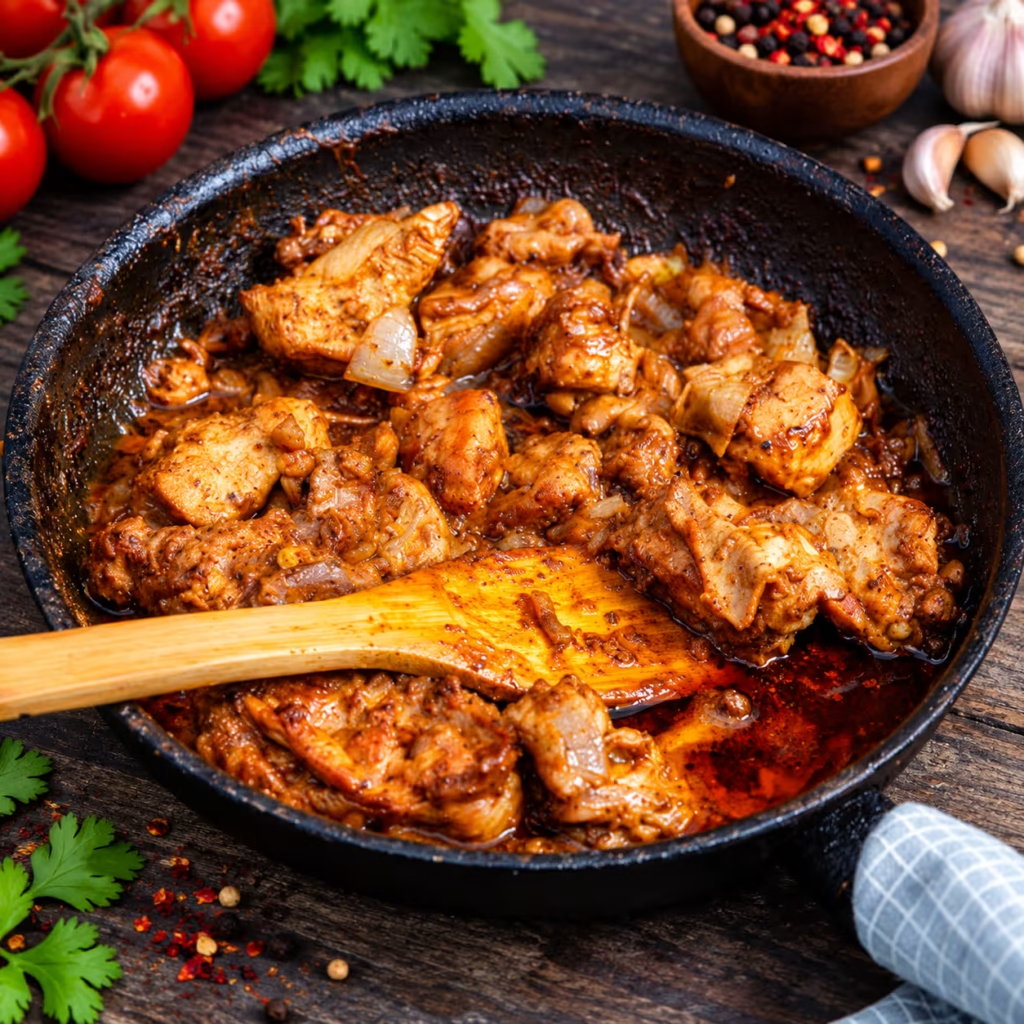
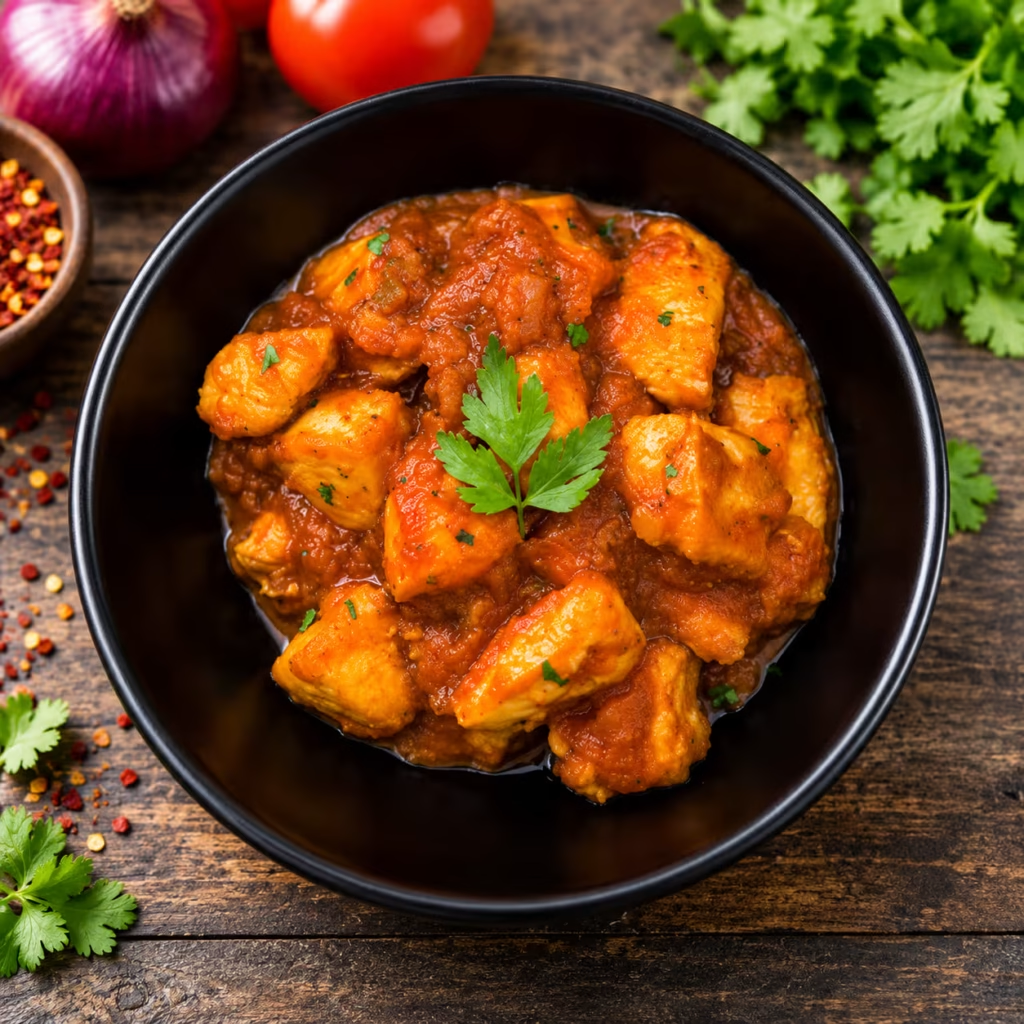
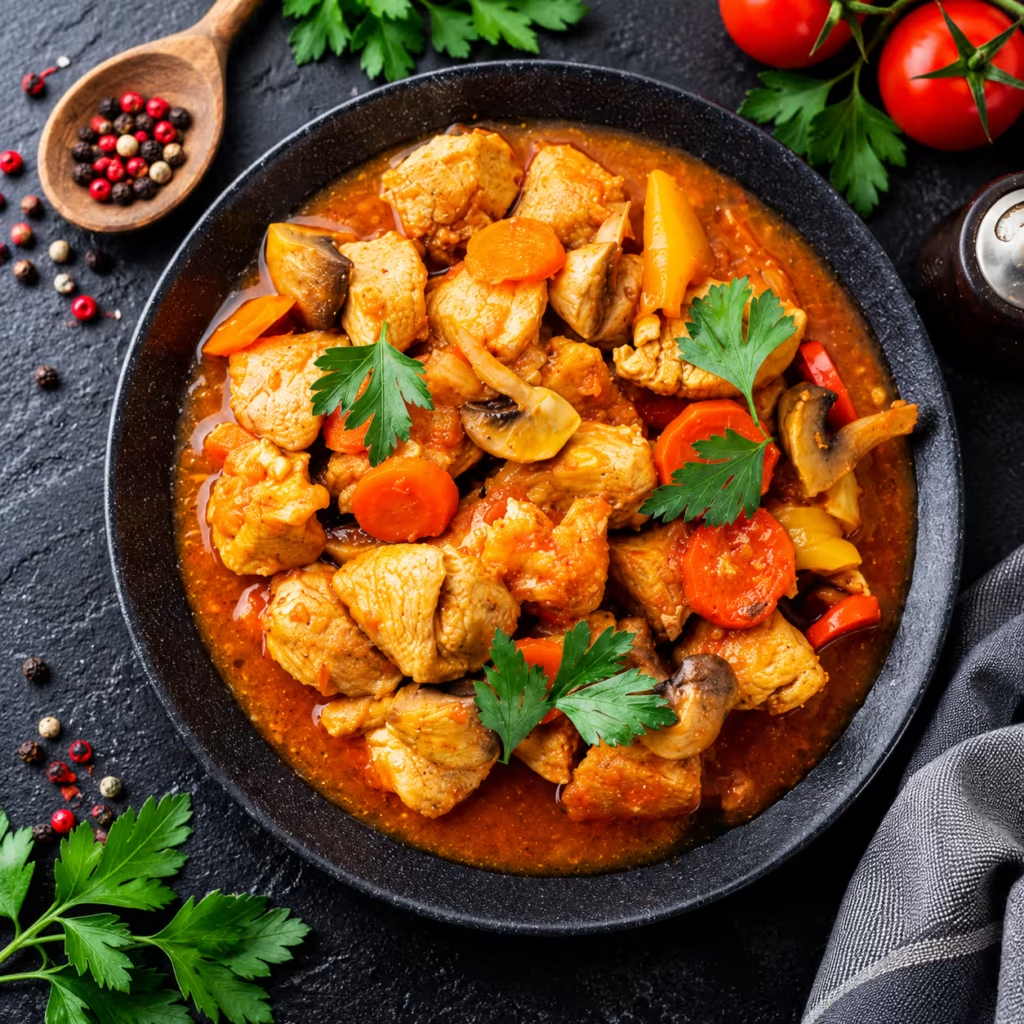
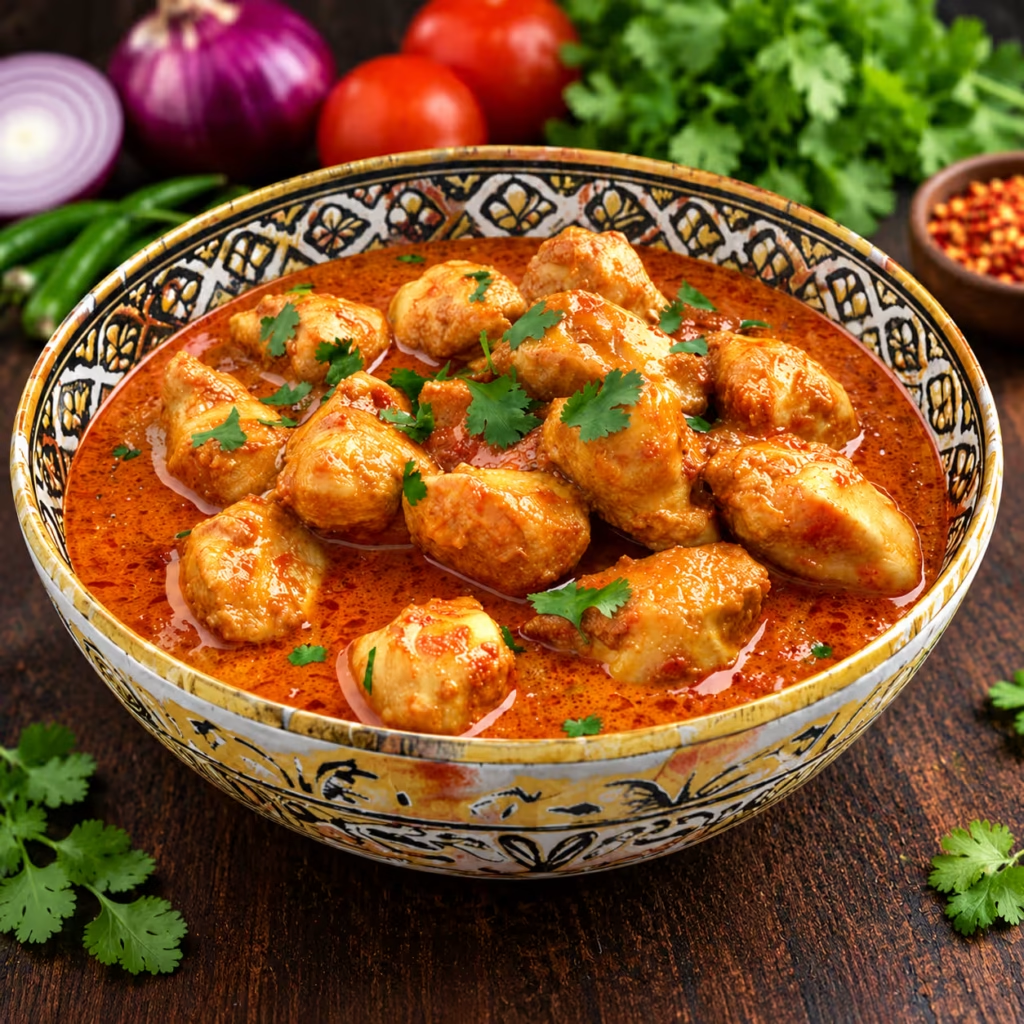
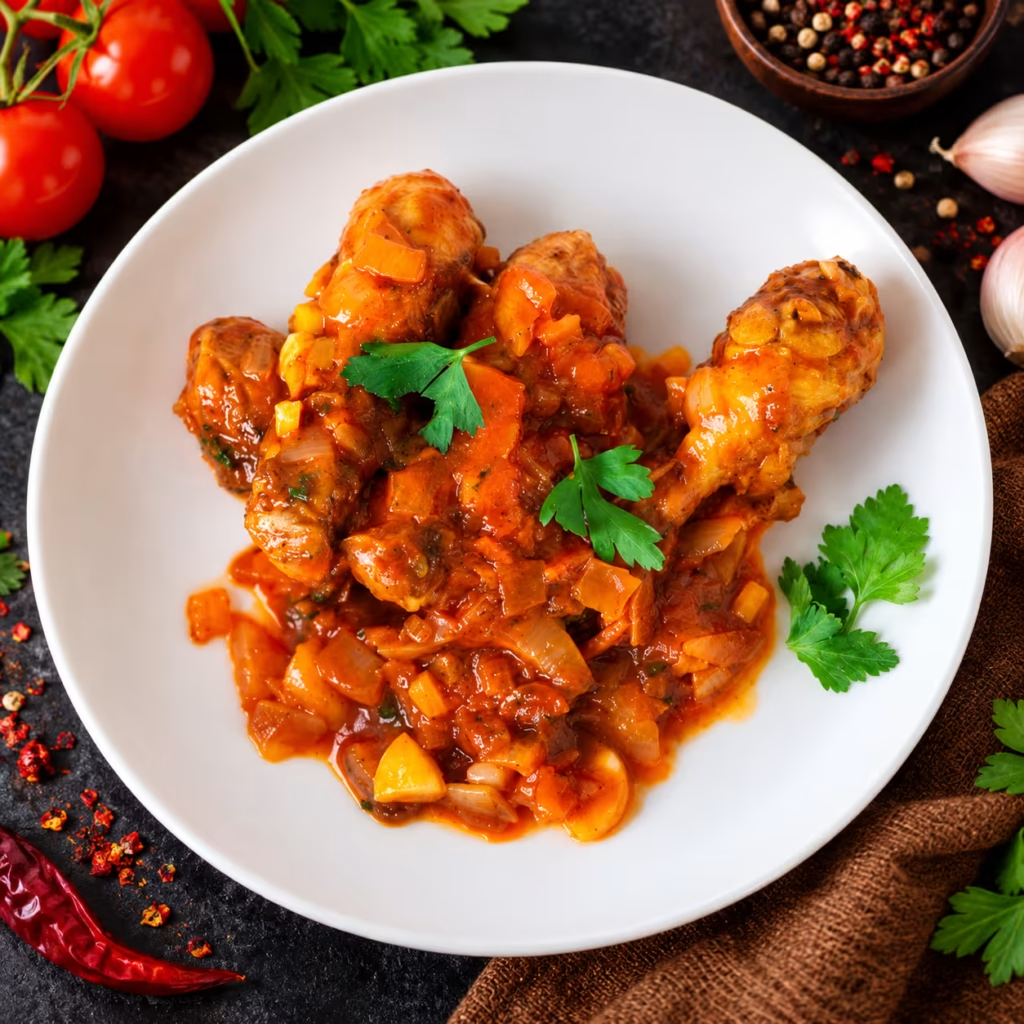
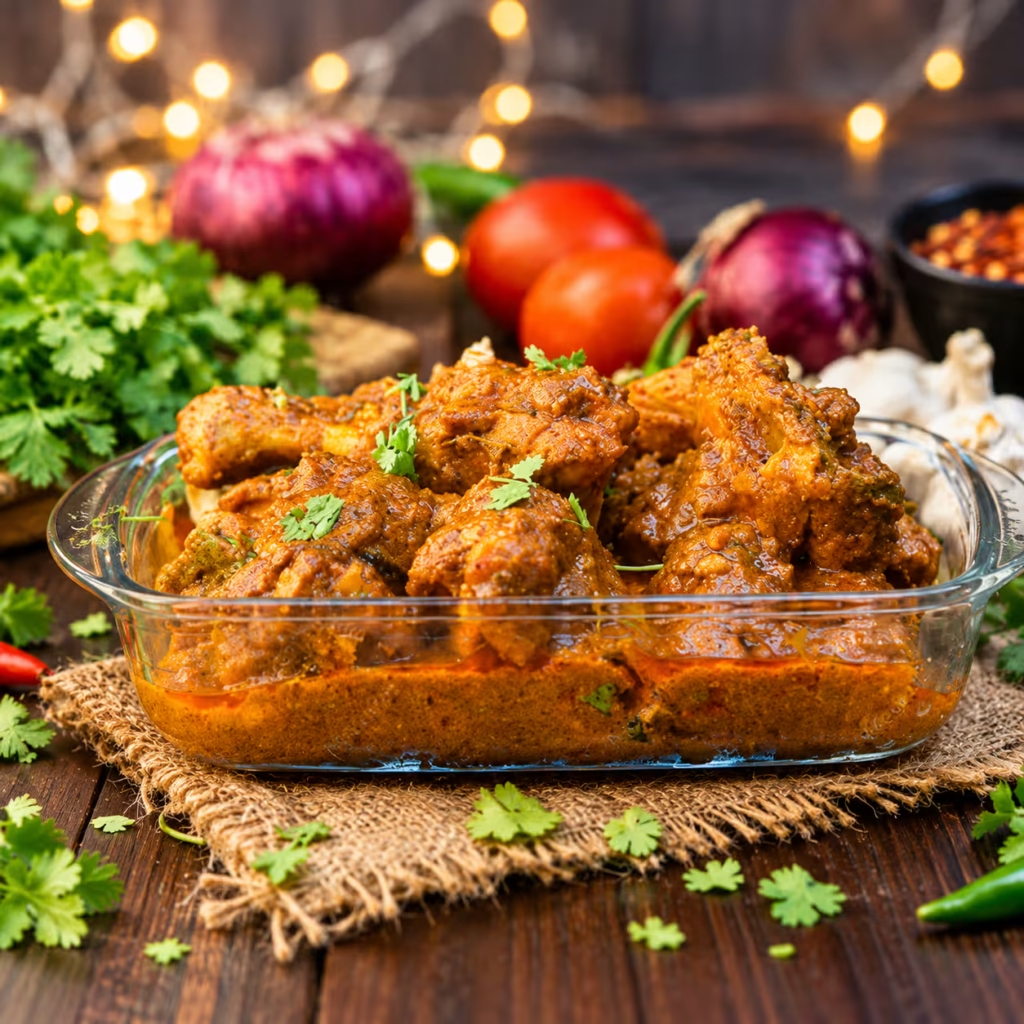
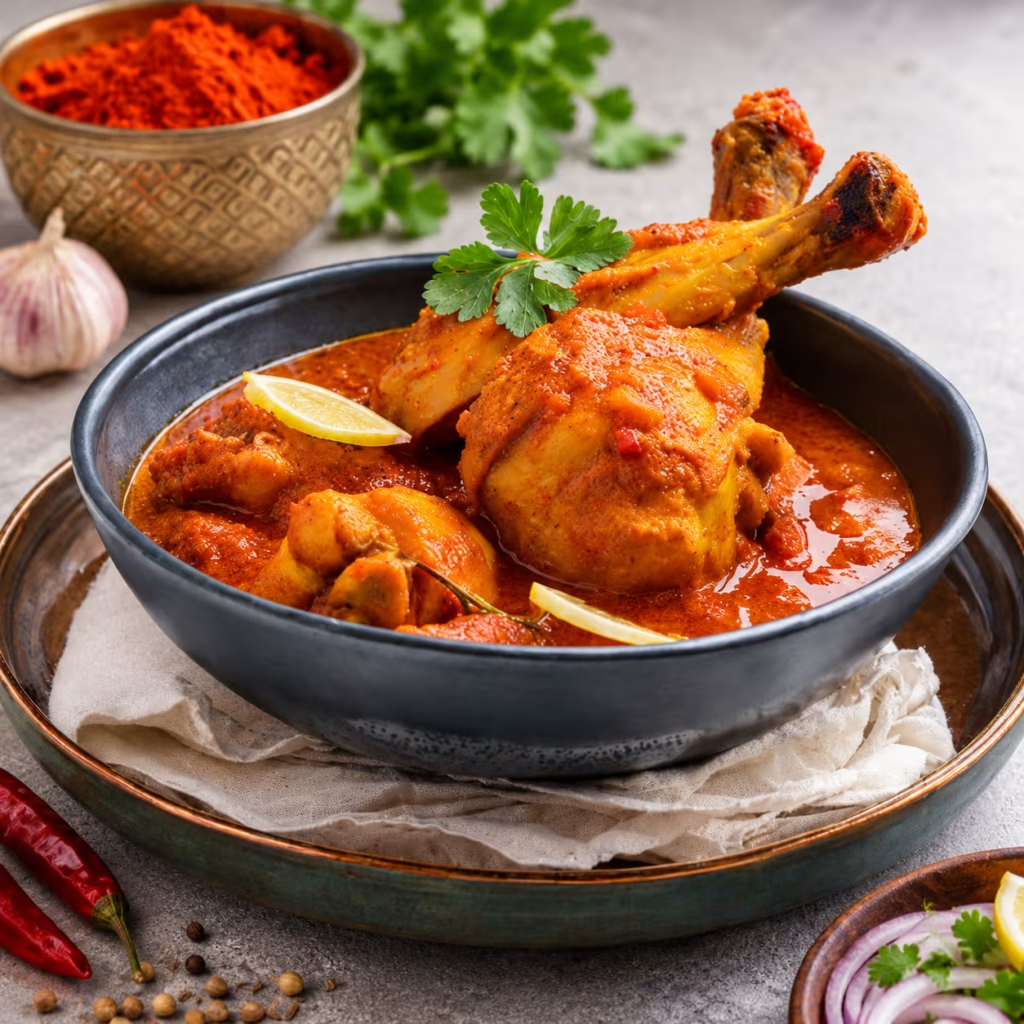
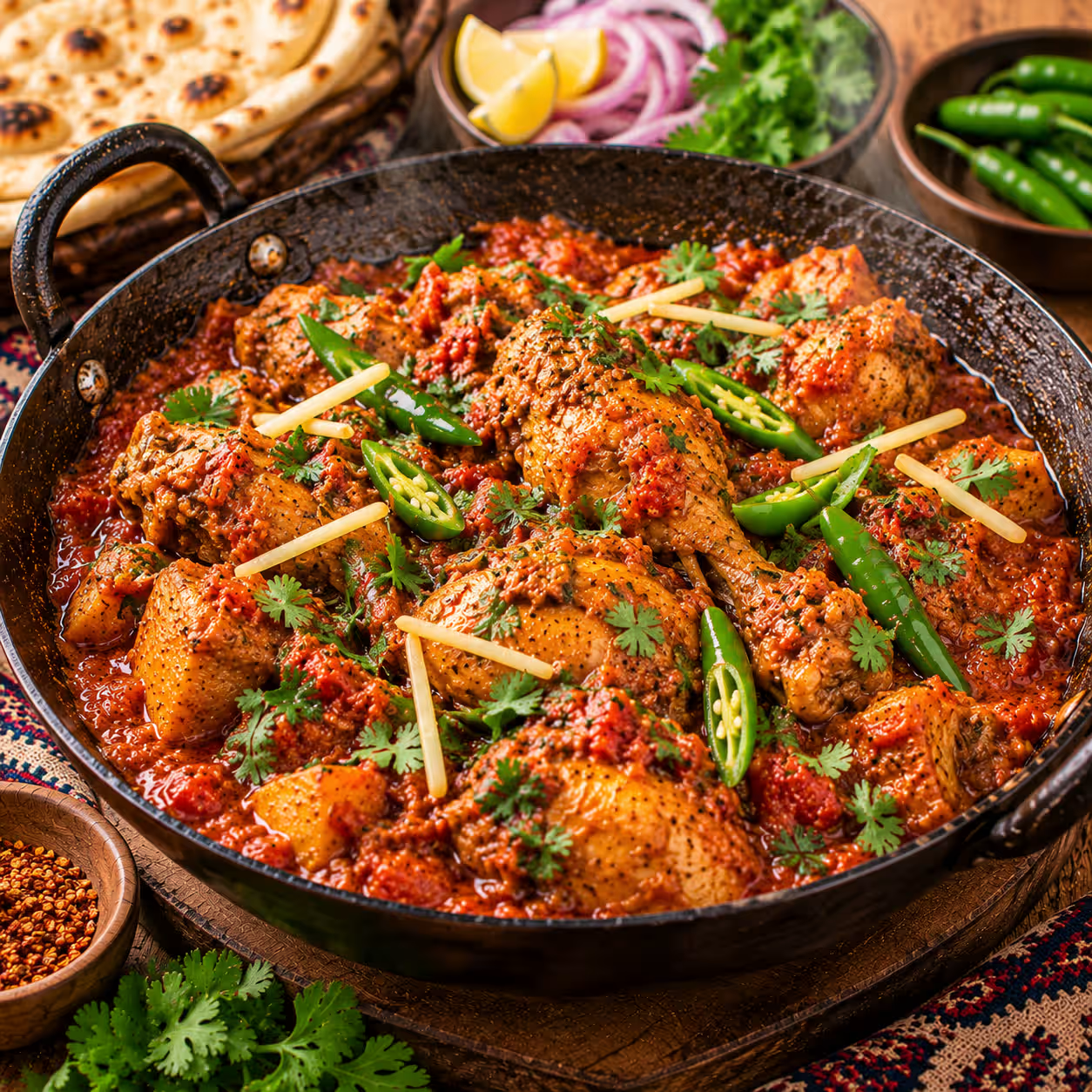
Pakistani chicken karahi is one of the most recognizable dishes associated with Pakistani cuisine. It is known for tender chicken cooked in a concentrated tomato-based masala with fresh ginger, garlic, green chilies and aromatic spices.
The name karahi comes from the traditional cooking vessel used for the dish. A karahi is a deep, rounded pan that allows ingredients to be cooked over relatively high heat while being stirred and reduced.
Unlike many curries that rely on a large quantity of gravy, traditional chicken karahi often has a thick, concentrated masala that clings to the chicken. Fresh tomatoes, ginger, garlic and green chilies are particularly important to its character.
Chicken karahi is served in Pakistani homes, restaurants, roadside eateries and traditional food establishments. It can be prepared as a family meal or cooked in larger quantities for gatherings.
The dish also has many regional and household variations. Peshawari, Lahori and restaurant-style karahi may differ in their use of tomatoes, spices, oil, ginger, green chilies and cooking techniques.
This guide explains what Pakistani chicken karahi is, where its distinctive character comes from, how it differs from other Pakistani curries, the ingredients and techniques involved, regional styles, serving traditions and its place in Pakistani food culture.
What Is Pakistani Chicken Karahi?
Chicken karahi is a Pakistani chicken dish traditionally cooked in a karahi-style pan.
The basic preparation typically combines:
- Chicken
- Fresh tomatoes
- Ginger
- Garlic
- Green chilies
- Cooking oil or ghee
- Coriander
- Cumin
- Black pepper
- Garam masala in some versions
The ingredients are cooked over relatively high heat so that the tomato mixture reduces and becomes concentrated.
A finished karahi is generally thicker than a watery curry.
The chicken should be coated with the tomato and spice masala rather than swimming in a large amount of gravy.
Why Is It Called Karahi?
The word karahi refers to a type of cooking vessel traditionally used in South Asian kitchens.
A traditional karahi is similar to a deep, rounded wok.
Its shape is useful for:
- High-heat cooking
- Frying
- Stirring
- Reducing sauces
- Cooking meat quickly
Over time, dishes cooked in this vessel also became known by the name karahi.
Therefore, chicken karahi describes both a dish and the traditional cooking style associated with the vessel.
What Makes Traditional Chicken Karahi Different?
Traditional chicken karahi is generally defined by a relatively short list of strongly flavored ingredients rather than a very long spice list.
The most important elements are often:
Fresh Tomatoes
Tomatoes provide acidity, moisture and the characteristic red base.
Fresh Ginger
Ginger contributes warmth and freshness and is commonly used both during cooking and as a garnish.
Garlic
Garlic forms part of the aromatic foundation.
Green Chilies
Green chilies provide heat and fresh aroma.
Fresh Coriander
Coriander is often added toward the end to provide freshness.
High-Heat Reduction
The tomato masala is cooked down until it becomes concentrated.
This reduction is an important part of karahi cooking.
Pakistani Chicken Karahi Flavor Profile
A well-prepared Pakistani chicken karahi is typically:
- Savory
- Tangy
- Aromatic
- Spicy to varying degrees
- Tomato-forward
- Ginger-rich
- Garlic-scented
- Fresh from green chilies and coriander
The dish should not simply taste like generic curry powder.
Fresh ingredients are central to its character.
The tomato should provide acidity, while ginger and garlic provide aromatic depth.
Green chilies contribute heat and freshness.
The Role of Fresh Tomatoes
Fresh tomatoes are one of the most recognizable ingredients in many Pakistani chicken karahi recipes.
They provide:
- Moisture
- Acidity
- Color
- Natural sweetness
- Body to the masala
As the tomatoes cook down, their water evaporates and their flavor becomes more concentrated.
This is why a karahi can develop a thick masala without requiring flour or other artificial thickeners.
The Importance of Ginger and Garlic
Fresh ginger and garlic are essential aromatic ingredients in many versions of chicken karahi.
They can be added at the beginning of cooking and supplemented with fresh ginger matchsticks near the end.
The combination creates the distinctive fresh aroma associated with many restaurant-style karahi dishes.
Using too much ginger or garlic can overpower the tomato and chicken, so balance is important.
The Role of Green Chilies
Green chilies contribute both heat and aroma.
The quantity varies according to:
- Regional style
- Restaurant
- Household preference
- Chili variety
- Desired spice level
Some versions are very hot, while others use green chilies primarily for aroma.
Therefore, Pakistani chicken karahi does not have one fixed level of spiciness.
Is Pakistani Chicken Karahi Very Spicy?
It can be, but it does not have to be.
The spice level can be adjusted by changing:
- Green chilies
- Red chili powder
- Black pepper
- Biryani or curry spice blends, if used
A traditional karahi does not need to be overwhelmingly hot to be flavorful.
The combination of fresh tomatoes, ginger, garlic and green chilies creates much of its characteristic taste.
Regional Styles of Chicken Karahi
There is no single standardized Pakistani chicken karahi recipe.
Different cities and regions have developed their own interpretations.
Peshawari Chicken Karahi
Peshawari-style karahi is associated with the food traditions of Peshawar and the wider Khyber Pakhtunkhwa region.
It is often characterized by relatively straightforward seasoning and a strong focus on:
- Chicken
- Tomatoes
- Ginger
- Garlic
- Green chilies
- Fresh coriander
Some versions use fewer powdered spices than heavily seasoned restaurant karahis.
The goal is often to allow the chicken, tomato and fresh aromatics to remain prominent.
Lahori Chicken Karahi
Lahori-style karahi is associated with Lahore’s vibrant restaurant and street-food culture.
Different establishments prepare it differently, but versions commonly emphasize:
- Tomatoes
- Ginger
- Garlic
- Green chilies
- Fresh coriander
- Aromatic spices
- A concentrated masala
Some restaurant versions use a generous amount of oil or ghee to develop a rich finish.
Restaurant-Style Chicken Karahi
Restaurant karahi can vary significantly.
It may contain more oil, tomatoes, ginger, green chilies and finishing spices than a typical home version.
Restaurants may also cook the chicken over stronger heat to achieve the characteristic concentrated masala.
Home-Style Chicken Karahi
Home cooks often adapt the dish to available ingredients and household preferences.
A home version may:
- Use less oil
- Reduce chili
- Use boneless chicken
- Include additional spices
- Produce more gravy
- Use fewer tomatoes
There is no requirement for every household version to follow restaurant proportions.
Chicken Karahi vs. Other Pakistani Curries
Chicken karahi is often confused with other Pakistani chicken curries, but the cooking approach can be quite different.
| Chicken Karahi | Traditional Chicken Curry |
|---|---|
| Often tomato-forward | May use a larger onion-based gravy |
| Usually relatively concentrated | Often has more liquid |
| Fresh ginger and green chili are prominent | Spice blend may be broader |
| High-heat reduction is important | Gentle simmering is common |
| Usually cooked in a karahi-style pan | Often cooked in a standard pot |
| Fresh finish is important | Can rely more heavily on cooked masala |
These are general distinctions rather than strict rules.
Chicken Karahi vs. Chicken Handi
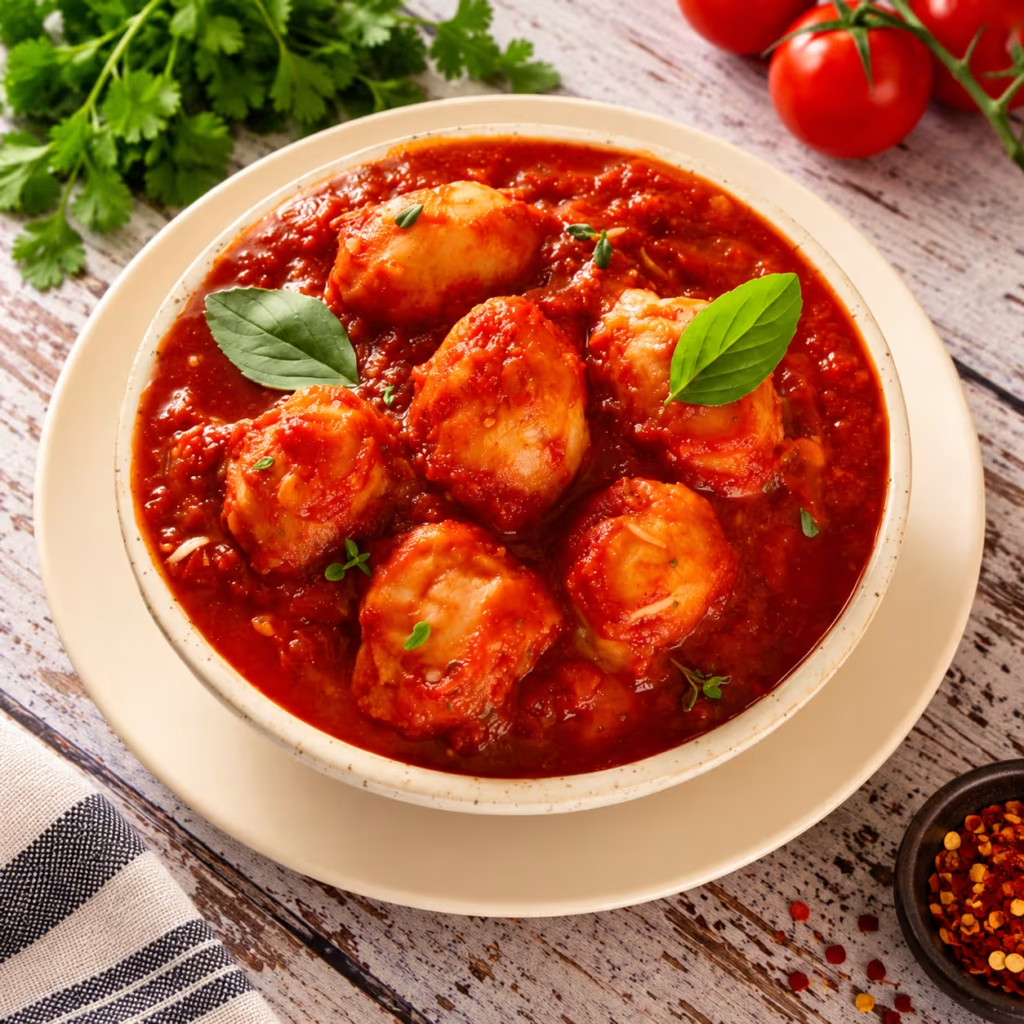
Chicken handi is another popular South Asian chicken preparation.
A handi is traditionally associated with a clay or deep cooking vessel.
Depending on the recipe, chicken handi may contain:
- Cream
- Yogurt
- Cashews
- Richer gravy
- A more creamy texture
Chicken karahi is generally more tomato-forward and fresh-tasting.
Chicken Karahi vs. Chicken Tikka Masala
These dishes are also different.
Chicken tikka masala commonly involves grilled or roasted chicken pieces placed into a spiced sauce.
Chicken karahi generally cooks the chicken directly with the tomato and aromatic masala.
The flavor and cooking process are therefore different.
Essential Ingredients in Pakistani Chicken Karahi
Chicken
Bone-in chicken can provide additional flavor, while boneless thighs are convenient for quick cooking.
Tomatoes
Fresh ripe tomatoes form the foundation of many versions.
Ginger
Fresh ginger provides warmth and aroma.
Garlic
Garlic adds savory depth.
Green Chilies
These contribute heat and freshness.
Cooking Oil or Ghee
Oil helps fry the aromatics and cook down the tomato masala.
Fresh Coriander
Coriander provides a fresh finishing note.
Cumin
Cumin contributes earthy aroma.
Coriander Powder
Coriander powder adds warm, slightly citrusy spice.
Black Pepper
Black pepper can add additional warmth without relying entirely on red chili.
Garam Masala
Some versions use a small amount toward the end for additional aroma.
Should Chicken Karahi Contain Onions?
This depends on the style.
Some traditional versions use little or no onion and focus strongly on tomatoes, ginger, garlic and green chilies.
Other Pakistani household and restaurant recipes include onions.
Therefore, onion should not be treated as an absolute requirement for every chicken karahi.
Should Chicken Karahi Contain Yogurt?
Again, this depends on the recipe.
Some versions use yogurt, while many tomato-forward karahi preparations do not.
A tomato-based karahi can achieve its characteristic body through tomato reduction rather than yogurt.
The Importance of a Karahi Pan
Cooking in a karahi-style vessel can influence the cooking process.
The broad cooking surface and deep sides make it useful for:
- High-heat frying
- Rapid evaporation
- Stirring chicken
- Reducing tomato masala
However, a heavy frying pan or wok can also work in a home kitchen.
The important factor is the ability to control heat and reduce the masala without burning it.
How Pakistani Chicken Karahi Is Cooked
Although methods differ, a typical approach follows these stages.
Step 1: Heat the Cooking Fat
Oil or ghee is heated in the karahi.
Step 2: Add Aromatics
Ginger and garlic are cooked briefly.
Depending on the recipe, whole spices may also be added.
Step 3: Cook the Chicken
The chicken is added and cooked over relatively high heat.
Step 4: Add Tomatoes
Fresh tomatoes are added and allowed to soften.
Step 5: Add Spices
Ground spices and salt are incorporated.
Step 6: Reduce the Masala
The mixture is cooked until excess tomato water evaporates and the masala becomes thick.
Step 7: Add Green Chilies
Green chilies are added during cooking or toward the end.
Step 8: Finish With Fresh Ingredients
Fresh coriander and ginger are commonly used as finishing ingredients.
The final result should have a concentrated masala coating the chicken.
Why Reducing the Tomato Masala Matters
Reduction is one of the defining techniques of many karahi preparations.
Fresh tomatoes contain considerable water.
If the tomatoes are added and immediately served, the result may resemble a thin tomato curry rather than a concentrated karahi.
Cooking the tomatoes over appropriate heat allows water to evaporate.
The tomato flavor becomes more concentrated and the oil can begin separating around the edges.
This produces the characteristic thick coating associated with karahi.
How to Avoid Watery Chicken Karahi
If the finished dish is too watery, several factors may be responsible.
Too Much Water
Traditional karahi generally does not require a large amount of added water.
Tomatoes Were Too Watery
Different tomatoes contain different amounts of moisture.
Insufficient Reduction
The tomato mixture may simply need more time.
Pot Was Covered Too Early
Covering traps steam and slows evaporation.
For a concentrated karahi, cook uncovered during the reduction stage when appropriate.
How to Avoid Burning Chicken Karahi
High heat helps develop flavor, but it must be controlled.
To reduce the risk of burning:
- Use an appropriate heavy pan.
- Stir regularly.
- Reduce the heat if the masala begins sticking.
- Do not allow garlic to burn.
- Do not leave tomatoes unattended.
- Add a small amount of water only when necessary.
The objective is high enough heat for reduction but controlled enough to prevent scorching.
How to Get Restaurant-Style Karahi Flavor
Restaurant-style flavor does not necessarily come from adding more spices.
Focus on:
- Fresh ripe tomatoes
- Fresh ginger
- Fresh garlic
- Green chilies
- Properly cooked chicken
- Controlled oil
- High-heat reduction
- Fresh coriander
- Ginger matchsticks
- Correct seasoning
The finishing ingredients can make a noticeable difference.
What Is Served With Chicken Karahi?
Chicken karahi is traditionally suited to breads and rice.
Naan
Naan is particularly useful for scooping up the thick tomato masala.
Roti
Roti provides a lighter everyday accompaniment.
Chapati
Chapati works well with home-style karahi.
Tandoori Roti
Tandoori roti provides a smoky bread component.
Basmati Rice
A more gravy-heavy chicken karahi can be served with plain basmati rice.
Salad
Fresh cucumber, tomato and onion provide contrast.
Raita
Raita can provide a cooling element alongside a spicy karahi.
Chicken Karahi in Pakistani Restaurants
Chicken karahi has become a staple of Pakistani restaurant culture.
It is particularly associated with restaurants where food is prepared in karahi pans over high heat and served immediately.
A freshly prepared karahi often arrives at the table while the tomato masala is still hot and aromatic.
Restaurants may offer:
- Chicken karahi
- Mutton karahi
- Beef karahi
- Peshawari karahi
- Lahori karahi
- Special karahi
- Boneless karahi
The exact names and recipes vary between establishments.
Chicken Karahi and Pakistani Hospitality
Food plays an important role in hospitality in Pakistan.
A sizzling karahi can be an attractive dish for sharing because it is usually served directly from the cooking vessel or a hot serving dish.
It can be prepared for:
- Family dinners
- Weekend meals
- Visiting guests
- Restaurant gatherings
- Special dinners
Its combination of fresh aroma, hot masala and bread makes it well suited to communal dining.
Why Chicken Karahi Is Considered a Famous Pakistani Dish
Chicken karahi has become internationally recognizable as a Pakistani dish because of its presence in restaurants, home kitchens and Pakistani communities around the world.
Its identity is closely linked to ingredients that are easy to recognize:
- Chicken
- Tomato
- Ginger
- Garlic
- Green chili
- Fresh coriander
The relatively simple ingredient list also makes the dish adaptable to different kitchens.
Chicken Karahi Outside Pakistan
Pakistani restaurants around the world often serve chicken karahi.
Outside Pakistan, recipes may be adjusted according to:
- Available tomatoes
- Local chicken cuts
- Spice preferences
- Restaurant equipment
- Customer expectations
- Availability of Pakistani spices
As a result, a dish labeled “Pakistani chicken karahi” may not taste identical in every restaurant.
Is Chicken Karahi Healthy?
Chicken karahi can be part of a balanced meal, but its nutritional profile depends heavily on the ingredients and portion size.
Oil or ghee can significantly increase the calorie content.
Serving the dish with vegetables or salad and choosing an appropriate portion can make it part of a varied meal.
Avoid assuming that every restaurant karahi has the same nutritional profile.
Can Chicken Karahi Be Made With Less Oil?
Yes.
Traditional restaurant-style karahi may use a generous amount of oil because it helps fry the aromatics and reduce the tomato masala.
A home cook can reduce the amount of oil.
However, using too little fat can make it harder to properly cook the masala and may cause sticking.
A practical approach is to use enough oil to cook the ingredients comfortably without treating oil quantity as the main source of flavor.
Can Chicken Karahi Be Made Without Tomatoes?
It is possible, but the result will be quite different from the classic tomato-forward style.
Tomatoes provide acidity, moisture and characteristic flavor.
If they are removed, another cooking approach is needed to provide the dish’s moisture and acidity.
For a recognizable traditional-style chicken karahi, fresh tomatoes are generally an important ingredient.
Can Chicken Karahi Be Made Without Green Chilies?
Yes.
Green chilies can be reduced or omitted if you prefer a mild dish.
The tomato, ginger and garlic will still provide substantial flavor.
Can Chicken Karahi Be Made With Boneless Chicken?
Yes.
Boneless chicken thighs are particularly convenient because they cook quickly and remain relatively tender.
Boneless chicken breast can also be used but requires more careful cooking to prevent dryness.
Common Chicken Karahi Mistakes
Adding Too Much Water
This produces a thin curry rather than a concentrated karahi.
Not Reducing the Tomatoes
The tomato mixture needs enough time to cook down.
Burning the Garlic
Garlic can turn bitter if cooked at excessively high heat for too long.
Overcooking the Chicken
Chicken should be cooked until properly done without unnecessary prolonged cooking.
Using Too Many Spices
More spices do not automatically produce better karahi.
Fresh ingredients are central to the dish.
Using Unripe Tomatoes
Tomatoes with insufficient flavor can produce a flat or overly acidic result.
Covering the Karahi for Too Long
Excess steam can prevent the tomato masala from reducing.
Troubleshooting Chicken Karahi
Why Is My Chicken Karahi Watery?
The most common reasons are too much added water, very watery tomatoes or insufficient reduction.
Cook uncovered for a while to allow excess moisture to evaporate.
Why Is My Chicken Karahi Too Sour?
The tomatoes may be particularly acidic.
A small amount of natural sweetness from well-cooked onion or other recipe-specific adjustments can help balance acidity, but avoid adding large amounts of sugar.
Why Is My Chicken Karahi Too Spicy?
Reduce the quantity of green chilies and red chili powder in future batches.
Serve the dish with plain yogurt or raita to provide a cooling contrast.
Why Is My Chicken Dry?
Chicken breast can become dry when overcooked.
Boneless chicken thighs are generally more forgiving.
Why Does My Karahi Taste Like Ordinary Curry?
The tomato masala may not have been reduced sufficiently, or the recipe may contain a large amount of liquid.
Traditional karahi generally has a more concentrated masala.
Why Is My Masala Burning?
The heat may be too high, the pan may be too thin or there may not be enough cooking fat.
Reduce the heat and stir regularly.
Chicken Karahi vs. Curry: Quick Comparison
If you want to understand the difference at a glance:
Chicken Karahi:
Concentrated tomato masala, fresh ginger, garlic and green chilies, relatively high-heat cooking and usually limited gravy.
Chicken Curry:
Often more liquid, broader spice combinations and longer simmering.
Both are important parts of Pakistani cooking, but they create different eating experiences.
Chicken Karahi vs. Chicken Handi
Chicken Karahi:
Fresh tomato, ginger, garlic and green chili are usually prominent.
Chicken Handi:
Often richer and creamier, depending on the recipe, with a different cooking vessel and sauce structure.
The two dishes should not be treated as interchangeable names.
Chicken Karahi Recipe Framework
For readers who want to understand the basic preparation, the following framework captures the main technique.
Prepare the Chicken
Cut the chicken into manageable pieces.
Bone-in chicken can provide additional flavor, while boneless thighs are convenient.
Prepare the Aromatics
Chop or grate fresh ginger and garlic.
Prepare the green chilies and coriander.
Build the Tomato Base
Heat oil in a karahi or heavy pan.
Add ginger and garlic.
Add chicken and cook until the exterior changes color.
Add chopped fresh tomatoes and spices.
Reduce the Masala
Cook uncovered until the tomatoes soften and excess moisture evaporates.
Continue until the masala becomes thick enough to coat the chicken.
Finish the Dish
Add green chilies, garam masala if used, fresh coriander and ginger matchsticks.
Serve immediately with naan, roti or another preferred accompaniment.
How to Make a Milder Chicken Karahi
For a family-friendly version:
- Reduce green chilies.
- Use less red chili powder.
- Keep the tomato base flavorful.
- Use fresh ginger and garlic.
- Serve additional chili separately.
This preserves the character of the dish while reducing heat.
How to Make Chicken Karahi More Aromatic
Instead of simply adding more powdered spices:
- Use fresh ginger.
- Use fresh garlic.
- Add green chilies toward the end.
- Use fresh coriander.
- Add ginger matchsticks as a garnish.
- Bloom whole spices briefly in oil when appropriate.
- Use ripe, flavorful tomatoes.
Fresh finishing ingredients can make the dish noticeably more aromatic.
How Chicken Karahi Fits Into Pakistani Cuisine
Chicken karahi is best understood as part of a broader Pakistani culinary landscape.
It sits alongside dishes such as:
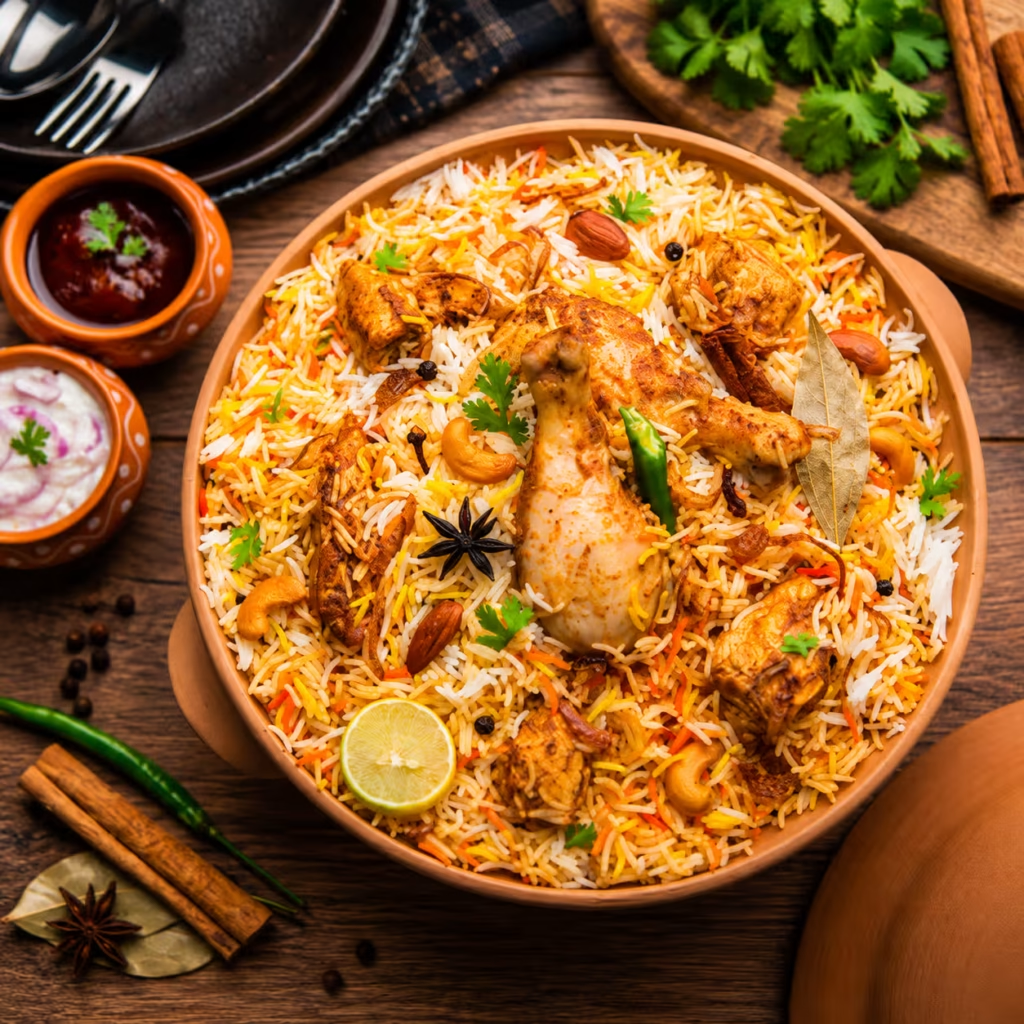
- Pakistani biryani
- Chicken tikka
- Nihari
- Haleem
- Chicken handi
- Daal
- Aloo gobi
- Chana
- Various kebabs
These dishes demonstrate the variety of Pakistani cooking, which includes rice dishes, meat curries, lentils, vegetables, breads and grilled foods.
Pakistani Karahi as a Food Tradition
Karahi is not simply a single recipe.
It represents a cooking approach that can be applied to different meats and ingredients.
Popular examples include:
- Chicken karahi
- Mutton karahi
- Beef karahi
- Peshawari karahi
- Lahori karahi
Each can have its own balance of tomato, chili, aromatics and spices.
This flexibility is part of what makes karahi such a recognizable element of Pakistani food culture.
Frequently Asked Questions
What is Pakistani chicken karahi?
Pakistani chicken karahi is a chicken dish commonly cooked with tomatoes, ginger, garlic, green chilies and aromatic spices in a karahi-style pan. It typically has a concentrated masala rather than a large amount of gravy.
Why is it called chicken karahi?
The dish takes its name from the karahi, a deep, rounded South Asian cooking vessel traditionally used to prepare it.
Is Pakistani chicken karahi spicy?
It can be moderately spicy or very hot depending on the recipe, region and amount of chilies used.
Does traditional chicken karahi contain onions?
Some versions contain onions, while others focus primarily on tomatoes, ginger, garlic and green chilies. It varies by regional and household tradition.
Does chicken karahi contain yogurt?
Some versions do, but many traditional tomato-forward preparations do not require yogurt.
What tomatoes are best for chicken karahi?
Use ripe, flavorful tomatoes with enough moisture to create the masala but enough flavor and acidity to balance the chicken.
Can I use canned tomatoes?
Yes, although the flavor and water content can differ from fresh tomatoes. Adjust the cooking time according to the moisture level.
Can I use boneless chicken?
Yes. Boneless chicken thighs are particularly convenient.
What should I serve with chicken karahi?
Naan, roti, chapati, tandoori roti and rice are all suitable. Raita and fresh salad are useful accompaniments.
What makes Peshawari karahi different?
Peshawari-style versions are often characterized by relatively straightforward seasoning and an emphasis on chicken, tomatoes, ginger, garlic and green chilies, although recipes vary.
What makes Lahori karahi different?
Lahori-style karahi can vary widely, but restaurant versions often emphasize a rich tomato masala, fresh ginger, green chilies and aromatic spices.
Can chicken karahi be made with less oil?
Yes. Home versions can use less oil, although sufficient fat is useful for cooking the aromatics and reducing the masala.
How do I make chicken karahi thicker?
Cook the tomato mixture uncovered until excess water evaporates and the masala becomes concentrated.
Can I freeze chicken karahi?
Yes, although the texture of the chicken and masala may change slightly after freezing and reheating.
Practical Tips for Better Pakistani Chicken Karahi
For consistent results:
- Use fresh, ripe tomatoes.
- Use fresh ginger and garlic.
- Choose chicken pieces of similar size.
- Use a heavy-bottomed pan if a traditional karahi is unavailable.
- Avoid adding excessive water.
- Cook the tomatoes long enough to reduce.
- Control the heat rather than keeping it extremely high throughout.
- Add fresh coriander near the end.
- Use ginger matchsticks for a fresh finish.
- Adjust chili according to the actual variety of chilies you are using.
- Taste before serving.
- Serve the karahi hot.
The central principle is simple: build a flavorful masala and reduce it until it coats the chicken.
Explore More Pakistani Cuisine
If you want to learn more about Pakistani food, continue through the Zaiqahaus cuisine collection:
Traditional Pakistani Dishes — explore dishes that are strongly associated with Pakistani home and restaurant cooking.
Pakistani Cuisine — discover the broader ingredients, dishes, regions and culinary traditions of Pakistan.
Pakistani Food Culture — learn about the relationship between food, hospitality, family meals and celebrations.
Pakistani Spices — understand the spices and aromatics that create characteristic Pakistani flavors.
These topics provide useful context around chicken karahi rather than treating the dish as an isolated recipe.
Final Thoughts
Pakistani chicken karahi is a dish built around a relatively simple group of ingredients, but its distinctive character comes from how those ingredients are cooked.
Fresh tomatoes create the foundation, while ginger, garlic and green chilies provide aroma and heat. Controlled high-heat cooking reduces the tomato mixture into a concentrated masala that coats the chicken.
Regional and household versions can differ considerably. Peshawari, Lahori, restaurant-style and home-style preparations may use different quantities of spices, tomatoes, oil and chilies.
That diversity is part of Pakistani cuisine itself.
Whether served with naan at a restaurant, roti at home or rice for a family dinner, chicken karahi remains one of the most recognizable and adaptable dishes within Pakistani food culture.