Punjabi Chicken Karahi – Traditional Punjabi Chicken Dish
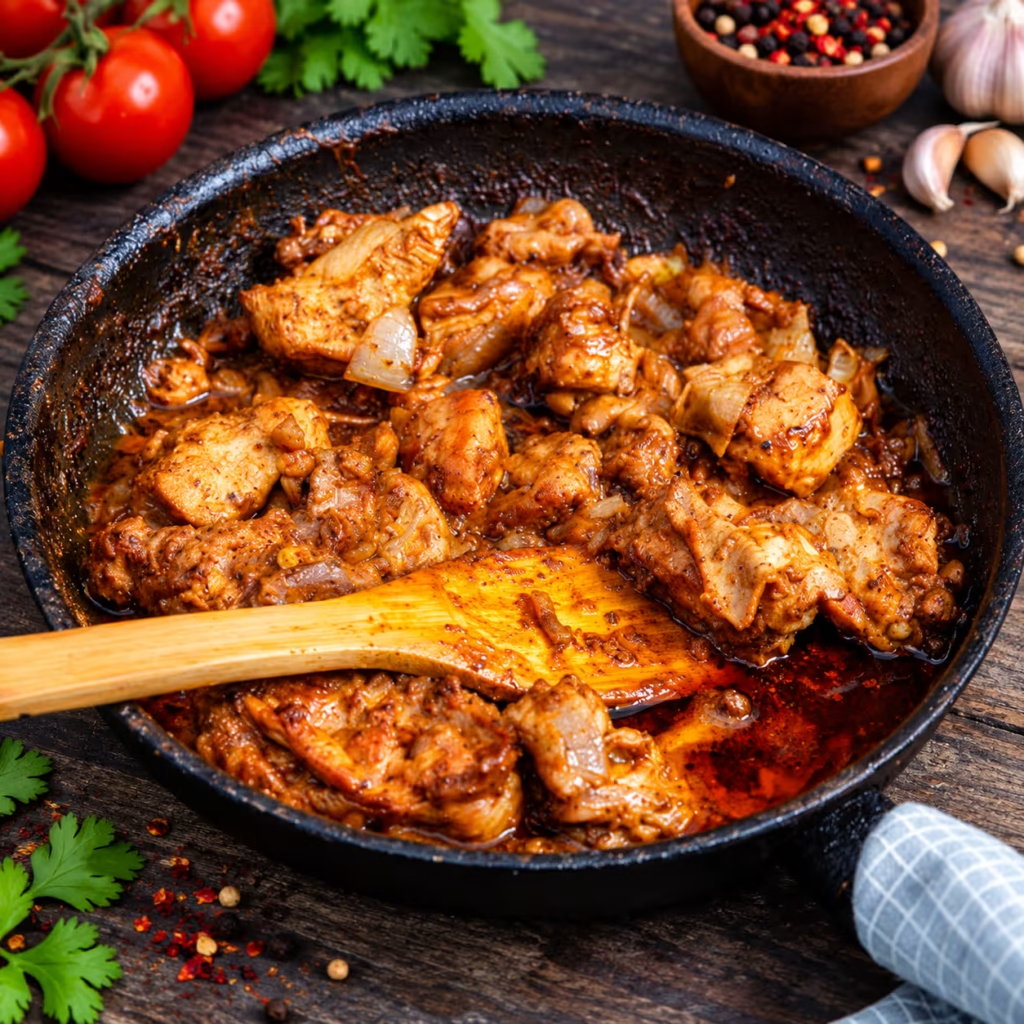
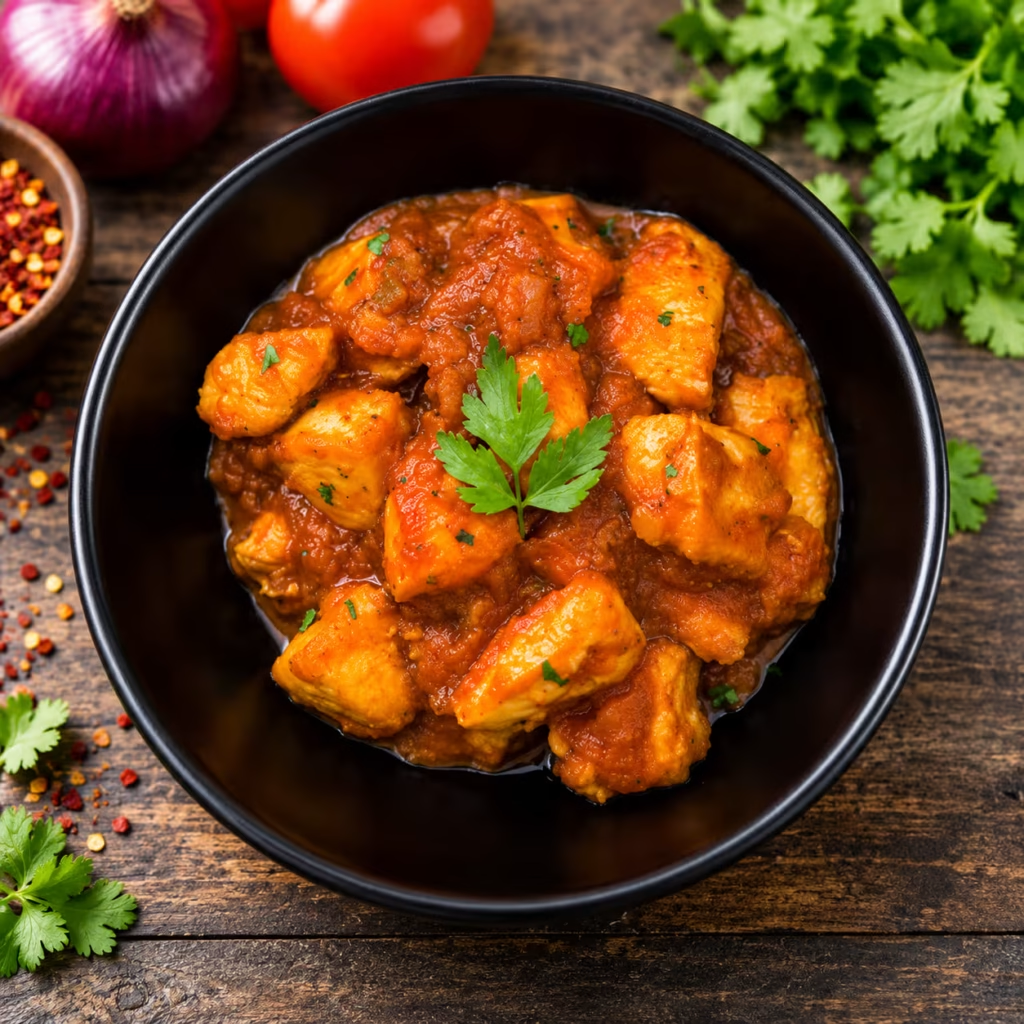
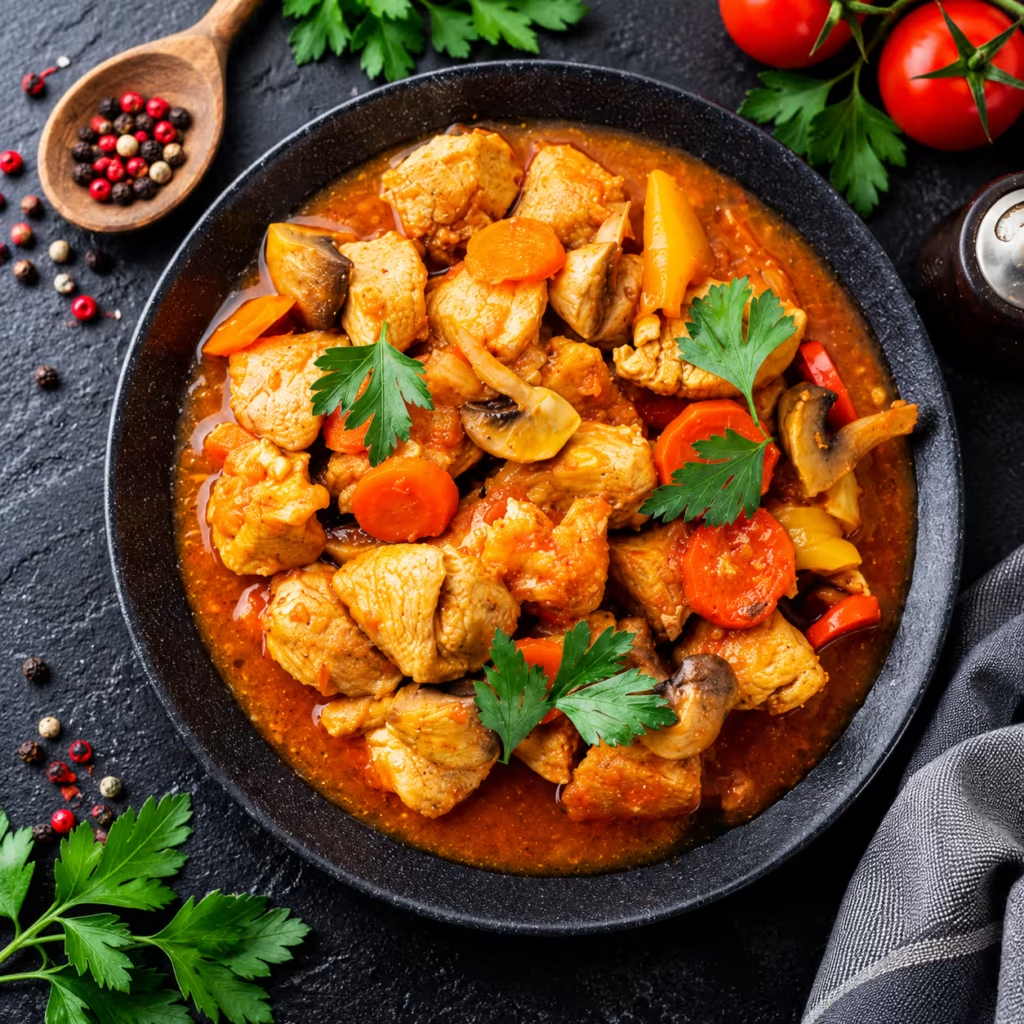
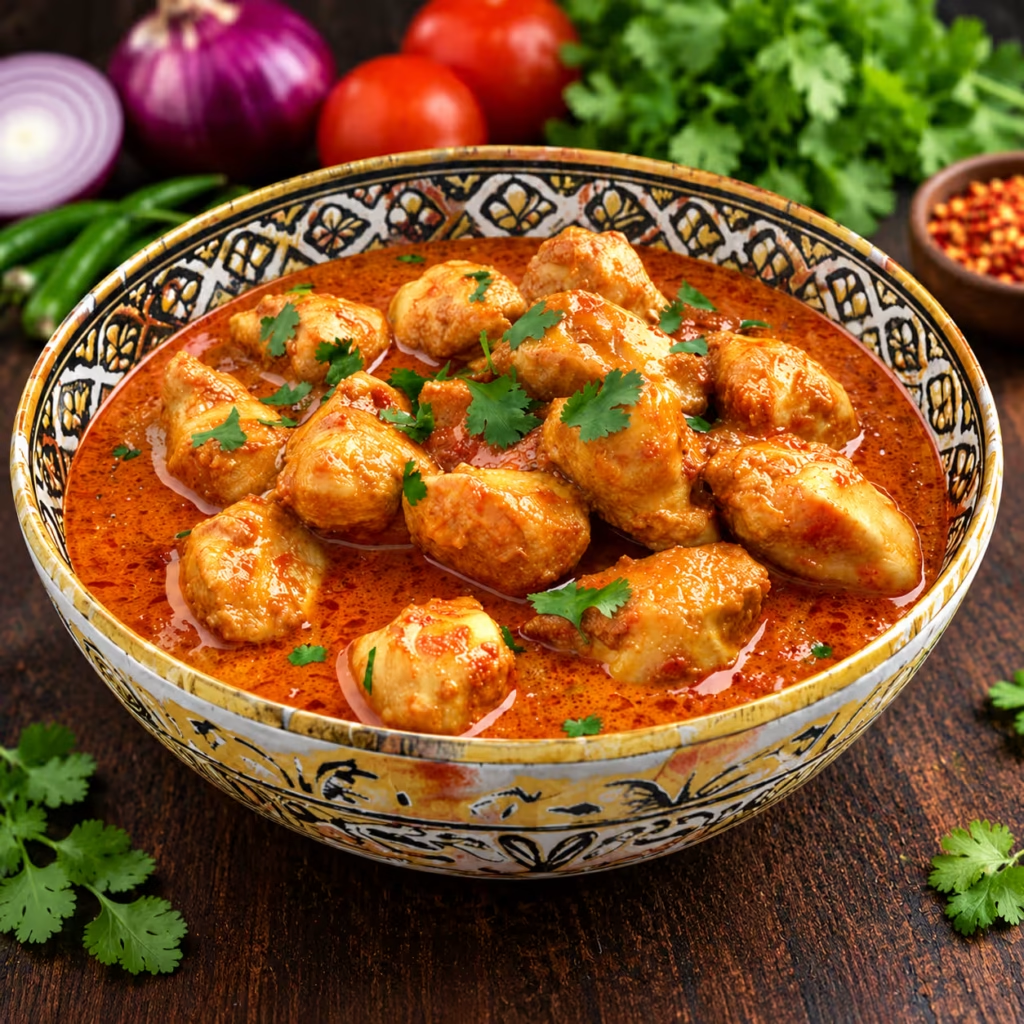
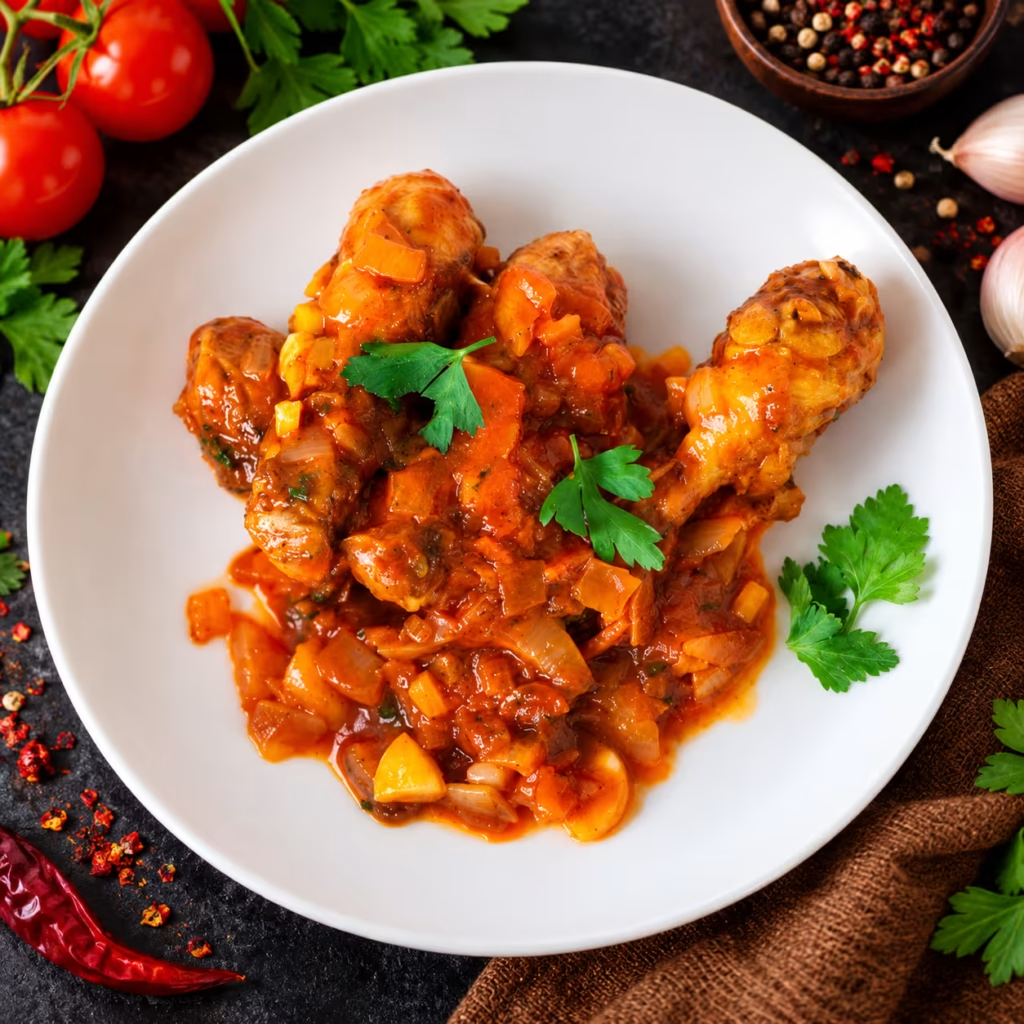
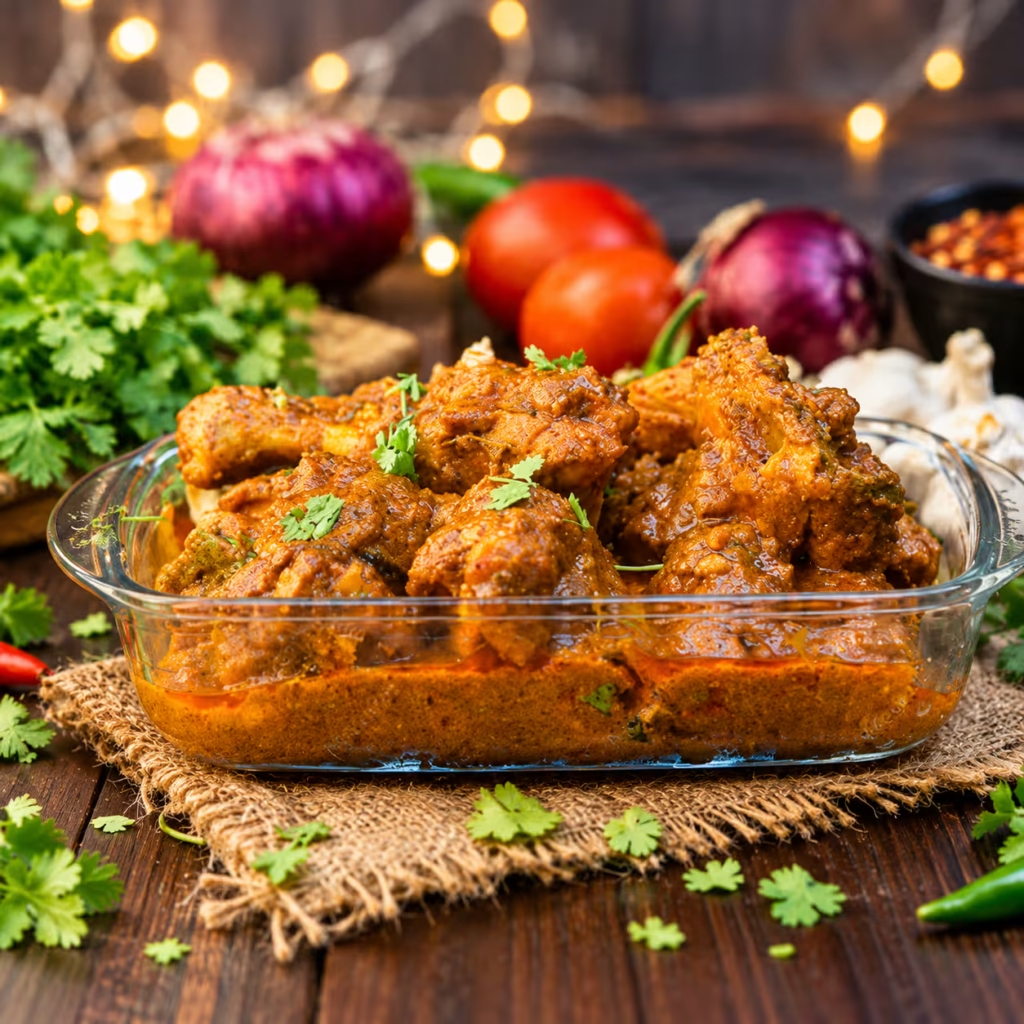
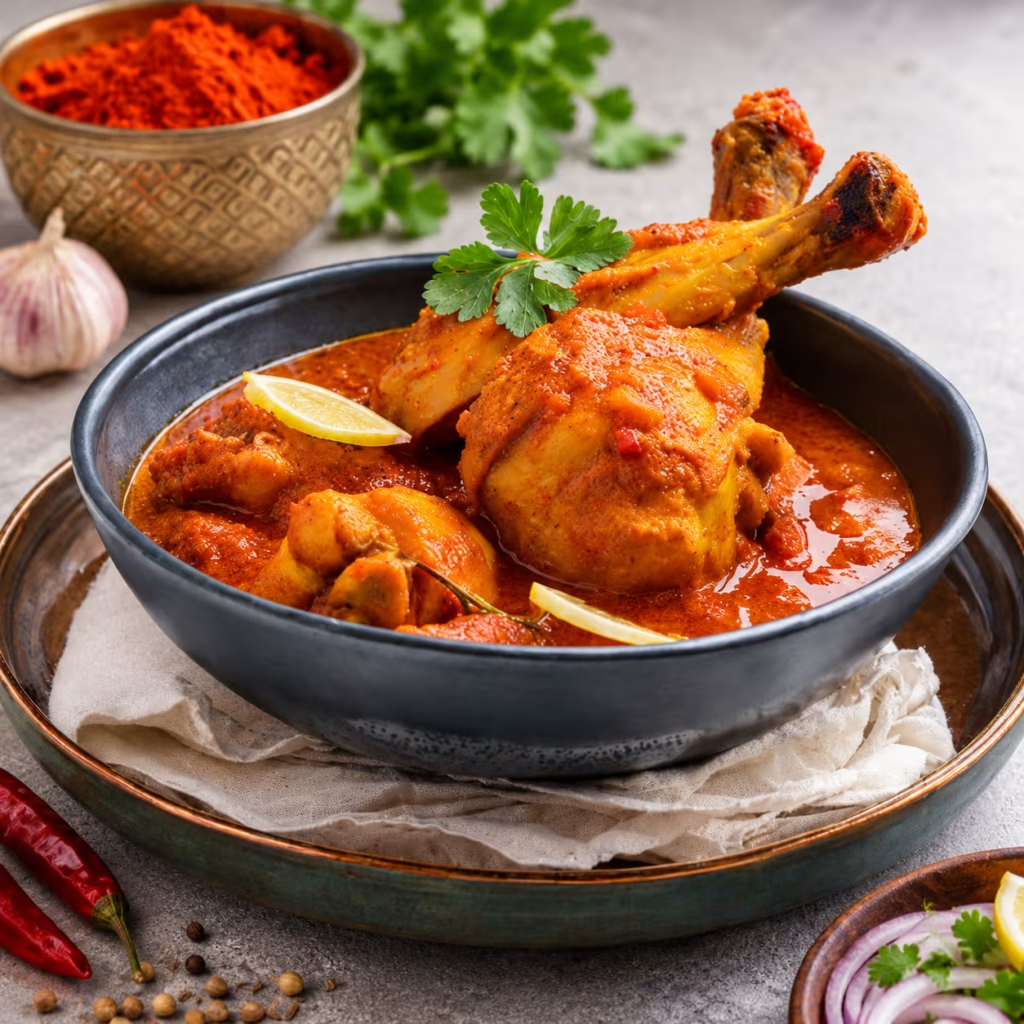
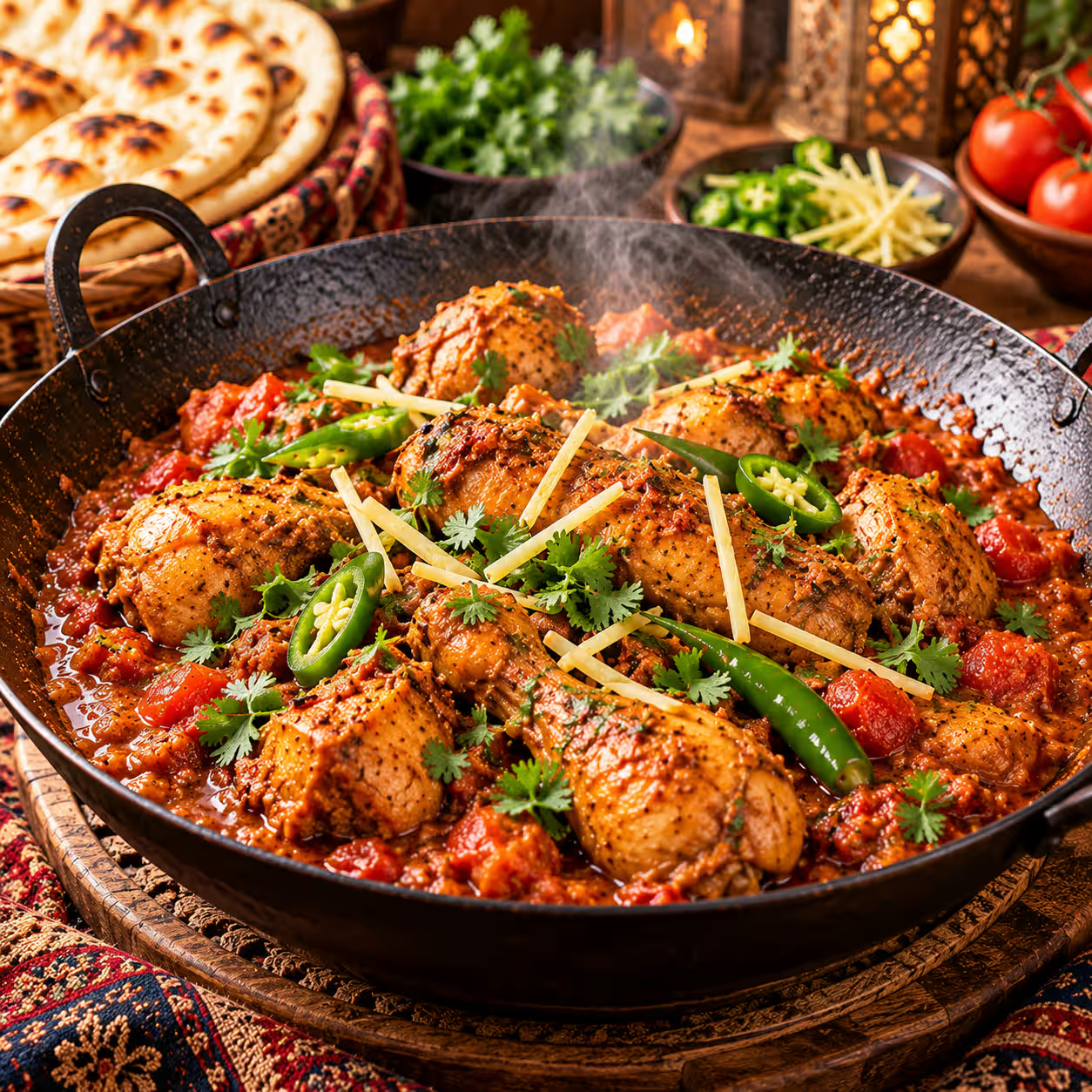
Punjabi chicken karahi is a flavorful Pakistani chicken dish prepared with chicken, tomatoes, ginger, garlic, green chilies and aromatic spices. It is characterized by a thick, concentrated tomato-based masala rather than a thin curry gravy.
The dish is closely connected with the broader tradition of Punjabi food culture, where bold flavors, fresh ingredients, generous portions and communal meals are important parts of everyday cooking.
A traditional Punjabi-style karahi can vary considerably from one household or restaurant to another. Some versions use more tomatoes, some emphasize ginger and green chilies, and others use additional whole spices or a small amount of yogurt. The cooking vessel, heat level and reduction of the tomato mixture can also influence the final result.
What makes Punjabi chicken karahi particularly interesting is the cooking technique. Rather than simply simmering chicken in a watery curry, the ingredients are cooked and reduced until the tomato mixture becomes concentrated and coats the chicken.
This article explores Punjabi chicken karahi in depth: what it is, how it fits into Punjabi cuisine, its ingredients, cooking principles, regional and household variations, serving traditions, differences from other karahi styles, common mistakes, practical cooking tips and its place in Punjabi home cooking.
What Is Punjabi Chicken Karahi?
Punjabi chicken karahi is a chicken dish cooked in a karahi, a deep, rounded cooking vessel traditionally used throughout South Asian cuisine.
The dish commonly combines:
- Chicken
- Fresh tomatoes
- Ginger
- Garlic
- Green chilies
- Cooking oil or ghee
- Coriander
- Cumin
- Red chili
- Black pepper
- Garam masala or other aromatic spices
The exact ingredients vary.
The finished dish typically has a thick masala that clings to the chicken rather than a large amount of liquid gravy.
Fresh ginger, green chilies and coriander are commonly added toward the end to provide freshness and contrast.
Why Is Chicken Karahi Important in Punjabi Cuisine?
Chicken karahi fits naturally into the broader Punjabi tradition of hearty, aromatic cooking.
Punjabi cuisine includes a wide range of foods, from:
- Tandoori meats
- Kebabs
- Dal
- Saag
- Rajma
- Chole
- Rice dishes
- Parathas
- Naan
- Meat curries
- Vegetable dishes
Karahi represents a style of cooking in which meat is cooked relatively quickly over strong heat while fresh ingredients are reduced into a concentrated masala.
This makes it particularly suitable for restaurants as well as home kitchens.
For readers exploring Pakistani food through the Punjabi Cuisine hub, Punjabi chicken karahi provides an excellent example of how ingredients, cooking equipment and technique combine to create a recognizable dish.
Punjabi Chicken Karahi and Punjabi Food Culture
Food in Punjab is strongly connected with family meals, hospitality and communal dining.
Chicken karahi works particularly well in this setting because it is:
- Easy to share
- Aromatic
- Served hot
- Suitable for naan and roti
- Adaptable to different spice levels
- Practical for both restaurants and family meals
A karahi can be placed in the center of the table, allowing everyone to share the dish with freshly baked bread.
This communal style of eating is an important part of the experience.
What Does Punjabi Chicken Karahi Taste Like?
Punjabi chicken karahi is generally rich, savory, tangy and aromatic.
Its flavor comes from the interaction of:
- Ripe tomatoes
- Ginger
- Garlic
- Green chilies
- Aromatic spices
- Chicken
- Oil or ghee
- Fresh coriander
The tomatoes provide acidity and body.
Ginger and garlic contribute warmth and aroma.
Green chilies provide freshness and heat.
The spices add depth without necessarily making the dish extremely hot.
A well-reduced tomato masala is one of the defining characteristics of a good chicken karahi.
The Importance of Fresh Tomatoes
Fresh tomatoes play a major role in many Punjabi-style chicken karahi preparations.
They provide:
- Acidity
- Moisture
- Natural sweetness
- Color
- Body
- Fresh tomato flavor
However, tomatoes contain considerable water.
If they are not reduced sufficiently, the finished dish can become thin and resemble an ordinary chicken curry.
The goal is to cook the tomatoes until their excess moisture evaporates and the remaining masala becomes concentrated.
Why Tomato Reduction Matters
Tomato reduction is one of the most important techniques in chicken karahi.
A useful progression is:
Fresh tomatoes → softened tomatoes → broken-down tomato mixture → reduced masala → concentrated karahi sauce
The chicken is then coated in this concentrated mixture.
This is very different from adding large amounts of water and allowing the chicken to boil in a thin gravy.
Ginger and Garlic in Punjabi Chicken Karahi
Fresh ginger and garlic form an important aromatic foundation.
Garlic contributes savory depth, while ginger adds freshness and gentle heat.
They can be added at different stages:
- During the initial cooking
- With the chicken
- During tomato reduction
- As a finishing garnish
Thin strips of fresh ginger added near the end are particularly useful because they provide a bright contrast to the rich tomato masala.
Green Chilies and Their Role
Green chilies are common in Punjabi-style karahi.
They contribute both:
- Heat
- Fresh herbal character
The amount can be adjusted according to preference.
For a milder version, green chilies can be reduced or served separately.
For a hotter restaurant-style preparation, additional fresh chilies may be added near the end.
The Karahi Cooking Vessel
The word karahi refers to the cooking vessel used for this style of dish.
A traditional karahi has a rounded shape and relatively wide opening.
This shape can be useful because it provides:
- Large cooking surface
- Good evaporation
- Easy stirring
- High-heat cooking
- Concentration of sauces
Modern home cooks may use a wok, heavy skillet or deep frying pan when a traditional karahi is unavailable.
The vessel can influence the cooking process, particularly how quickly moisture evaporates.
Why High Heat Matters in Karahi Cooking
Karahi cooking often relies on relatively high heat, particularly during the early stages.
High heat can help:
- Sear the chicken
- Develop aromatic flavors
- Cook down tomatoes
- Evaporate excess moisture
- Concentrate the masala
However, high heat must be controlled.
If the heat is too aggressive, garlic, ginger or spices can burn before the tomatoes have reduced.
The goal is strong heat with active cooking, not uncontrolled burning.
Traditional Punjabi Chicken Karahi Ingredients
There is no single universal ingredient list, but common ingredients include:
Chicken
Bone-in chicken is often valued for its flavor, while boneless chicken can make the dish quicker and easier to eat.
Tomatoes
Fresh ripe tomatoes form the main body of the masala.
Ginger
Used during cooking and frequently as a garnish.
Garlic
Adds savory aromatic depth.
Green Chilies
Provide freshness and heat.
Oil or Ghee
Helps cook the ingredients and carry spice aromas.
Cumin
Provides an earthy aromatic note.
Coriander
Fresh coriander provides brightness, while ground coriander can add warmth and depth.
Red Chili
Provides color and heat.
Black Pepper
Adds a sharp aromatic heat.
Garam Masala
Can be used in moderation to provide additional warmth.
Bone-In vs Boneless Chicken
Both can work well.
Bone-In Chicken
Advantages include:
- Richer flavor
- Good texture
- Traditional feel
- Suitable for longer cooking
Bone-in pieces can also contribute flavor to the sauce.
Boneless Chicken
Advantages include:
- Faster cooking
- Easier eating
- Convenient for busy households
- Useful for quick versions
Boneless chicken should not be overcooked because it can become dry.
Punjabi Chicken Karahi and Restaurant Cooking
Restaurant karahi often has a distinctive character.
Restaurants may use:
- High heat
- Large karahi vessels
- Fresh tomatoes
- Generous ginger
- Fresh green chilies
- More oil or ghee
- House spice blends
The cooking process is often fast once the ingredients have been prepared.
A restaurant cook can maintain high heat because the vessel is designed for rapid cooking and evaporation.
Punjabi Home Cooking vs Restaurant Karahi
Home and restaurant versions can be quite different.
Restaurant Style
May emphasize:
- Higher heat
- More oil
- Stronger seasoning
- More garnish
- Faster cooking
- Larger quantities
Home Style
May emphasize:
- Less oil
- Moderate spice
- Smaller quantities
- Longer controlled cooking
- Family preferences
- Easily available ingredients
Neither approach needs to be treated as the only authentic version.
Traditional foods naturally adapt to their cooking environment.
Is Punjabi Chicken Karahi the Same as Pakistani Chicken Karahi?
The terms overlap considerably.
Punjabi chicken karahi can be understood as a regional expression within the wider Pakistani karahi tradition.
However, Pakistan has many regional and restaurant variations.
Differences may appear in:
- Tomatoes
- Onions
- Yogurt
- Whole spices
- Chili level
- Cooking fat
- Garnishes
- Cooking time
Therefore, it is better to describe Punjabi chicken karahi as one style within the broader Pakistani karahi tradition rather than claiming that every Pakistani chicken karahi is Punjabi.
Punjabi Chicken Karahi vs Peshawari Chicken Karahi
Peshawari-style karahi is associated with the food traditions of the Peshawar region and can emphasize a relatively simple combination of meat, tomatoes, ginger, garlic and chilies.
Punjabi versions can vary more widely in spice combinations and preparation.
The exact distinction depends on the individual recipe or restaurant.
Regional food labels should therefore be treated as culinary traditions rather than rigid formulas.
Punjabi Chicken Karahi vs Lahori Chicken Karahi
Lahore is an important food city in Punjab and is well known for restaurant culture.
Lahori-style karahi preparations may feature:
- Strong tomato flavor
- Fresh ginger
- Green chilies
- Rich masala
- Generous garnishes
However, there is no single standardized recipe that every Lahore restaurant or household follows.
The label describes a culinary style rather than a legally fixed formula.
Punjabi Chicken Karahi vs Chicken Curry
Chicken curry usually contains more liquid and can be eaten with rice or bread as a gravy-based dish.
Karahi is generally more concentrated.
| Feature | Punjabi Chicken Karahi | Typical Chicken Curry |
|---|---|---|
| Gravy | Thick and concentrated | Often more liquid |
| Tomatoes | Prominent in many versions | Varies |
| Cooking vessel | Karahi/wok-style vessel | Pot or pan |
| Heat | Often relatively high | Usually moderate |
| Fresh ginger | Common garnish | Varies |
| Green chilies | Common | Varies |
| Main texture | Chicken coated in masala | Chicken surrounded by gravy |
These are broad differences because Pakistani cooking contains many overlapping curry traditions.
Punjabi Chicken Karahi vs Chicken Tikka Masala
These dishes should not be treated as the same.
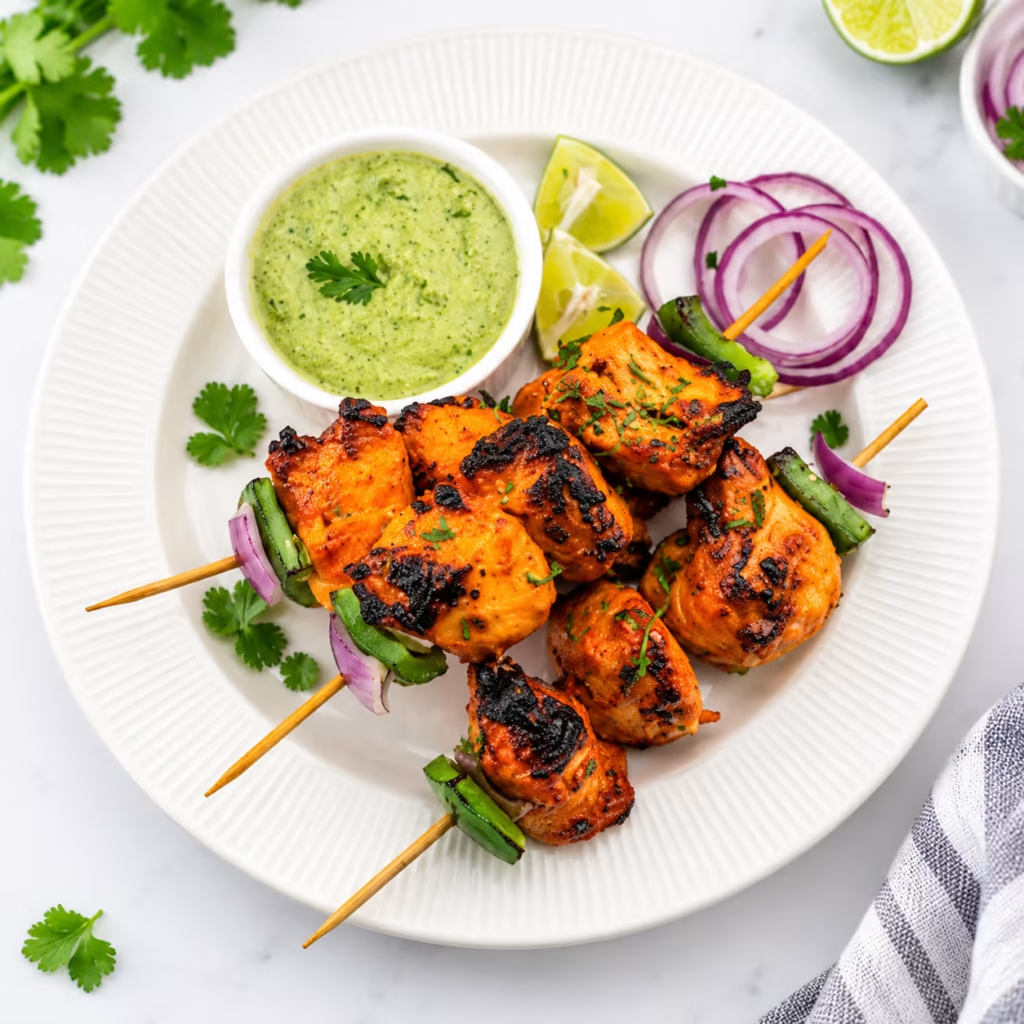
Chicken tikka masala generally involves cooked or grilled chicken combined with a creamy or spiced sauce.
Chicken karahi focuses more strongly on:
- Fresh tomatoes
- Ginger
- Garlic
- Green chilies
- High-heat cooking
- Concentrated masala
The cooking process and flavor structure are different.
The Role of Pakistani Spices
Punjabi chicken karahi demonstrates how spices can be used for aroma and depth rather than simply heat.
Common spices include:
- Cumin
- Coriander
- Red chili
- Black pepper
- Garam masala
The exact blend depends on the cook.
For readers interested in learning more about the ingredients behind Pakistani cooking, the Pakistani Spices section can provide a natural next step from this article.
Why Fresh Ingredients Matter in Karahi
Karahi is particularly dependent on fresh ingredients.
Fresh tomatoes have a different flavor from heavily processed tomato sauces.
Fresh ginger provides a brighter aroma than dried ginger powder.
Fresh green chilies provide a different character from dried chili.
Fresh coriander adds a final herbal note.
This is one reason restaurant and home cooks often prepare karahi immediately before serving.
The Cooking Process: From Chicken to Karahi
The traditional cooking principle can be understood as a series of flavor-building stages.
Preparing the Ingredients
Everything should be prepared before cooking because the process can move quickly.
Prepare:
- Chicken
- Tomatoes
- Ginger
- Garlic
- Green chilies
- Fresh coriander
- Spices
Heating the Cooking Fat
Oil or ghee is heated in the karahi.
Cooking the Aromatics
Cumin, ginger and garlic may be introduced according to the recipe.
The aromatics should become fragrant without burning.
Cooking the Chicken
The chicken is added and cooked at relatively high heat.
This helps develop flavor and allows excess moisture to evaporate.
Adding Tomatoes
Fresh tomatoes are added and cooked until they soften.
Reducing the Masala
The tomatoes continue cooking until the mixture becomes thick and concentrated.
Finishing With Chilies and Spices
Green chilies, garam masala and other finishing ingredients can be added near the end.
Garnishing
Fresh coriander and ginger strips complete the dish.
Why Water Should Be Used Carefully
One of the most common mistakes in karahi preparation is adding too much water.
Chicken and tomatoes already contain moisture.
Adding excessive water can transform a concentrated karahi into a thin curry.
If additional liquid is necessary, it should generally be added in small amounts according to the cooking stage.
How to Tell When Karahi Masala Is Properly Reduced
The masala should become visibly thicker.
Signs include:
- Tomatoes have broken down
- Excess water has evaporated
- Chicken is coated with sauce
- Oil may begin to separate slightly
- The mixture no longer looks watery
The exact appearance depends on the amount of oil, tomatoes and cooking method.
The Importance of Oil Separation
In many South Asian cooking traditions, slight separation of oil from the cooked masala can indicate that the mixture has been sufficiently cooked and reduced.
However, it should not be treated as a rigid rule.
Different recipes use different amounts of fat and may produce different visual results.
The more important question is whether:
- Tomatoes are fully cooked
- Raw flavors have disappeared
- The sauce is concentrated
- Chicken is properly cooked
Common Mistakes When Making Punjabi Chicken Karahi
Using Too Much Water
This produces a thin curry instead of a concentrated karahi.
Better approach: allow tomatoes and chicken to cook down naturally and add liquid only when necessary.
Using Unripe Tomatoes
Unripe tomatoes may lack the sweetness and juiciness needed for a balanced masala.
Better approach: use ripe tomatoes when possible.
Burning the Ginger and Garlic
High heat can quickly burn aromatics.
Better approach: control the heat and keep the ingredients moving.
Not Reducing the Tomatoes
This leaves the dish watery.
Better approach: give the tomato mixture enough time to concentrate.
Overcooking Boneless Chicken
Boneless chicken can become dry.
Better approach: monitor the cooking time carefully.
Adding Too Much Garam Masala
Excess garam masala can overpower the fresh tomato and ginger flavors.
Better approach: use it as a supporting spice.
Adding Garnishes Too Early
Fresh coriander and ginger can lose their fresh character if cooked for too long.
Better approach: add much of the garnish toward the end.
How to Make Punjabi Chicken Karahi Less Spicy
The heat can be adjusted without losing the basic character of the dish.
For a milder version:
- Reduce red chili
- Use fewer green chilies
- Remove chili seeds if desired
- Use more tomato
- Serve green chilies separately
The aromatic ingredients should remain so that reducing chili does not make the dish bland.
How to Make Karahi More Aromatic
For a more aromatic version, focus on:
- Fresh ginger
- Fresh garlic
- Whole cumin
- Fresh coriander
- Green chilies
- Good-quality tomatoes
- Freshly ground spices where appropriate
Adding excessive amounts of spices is usually less effective than using fresh ingredients correctly.
Can Punjabi Chicken Karahi Be Made Without Tomatoes?
Yes, but it becomes a different style of dish.
Tomatoes provide much of the acidity, moisture and characteristic flavor associated with many modern Pakistani chicken karahi preparations.
A tomato-free version would need another source of acidity and moisture.
It should therefore be treated as a variation rather than the same standard preparation.
Can Yogurt Be Added to Chicken Karahi?
Some variations use yogurt.
Yogurt can add:
- Tanginess
- Creaminess
- Moisture
However, a tomato-forward Punjabi karahi does not necessarily require yogurt.
Adding yogurt changes the flavor and texture.
Can Onion Be Added?
Yes.
Some household versions use onion, while other karahi styles emphasize tomatoes, ginger, garlic and chilies without making onion a central ingredient.
This is another example of why there is no single universal karahi recipe.
What Is Punjabi Chicken Karahi Served With?
Karahi is traditionally well suited to bread.
Naan
Naan is one of the most common accompaniments.
Its soft texture works particularly well with thick tomato masala.
Roti
Roti provides a lighter everyday option.
Tandoori Roti
Tandoori roti provides a smoky bread flavor that pairs well with the dish.
Salad
Fresh cucumber, tomato and onion can provide freshness.
Raita
Yogurt-based raita can provide cooling contrast.
Lemon
A small amount of lemon can brighten the rich tomato masala.
Punjabi Chicken Karahi and Family Dining
Punjabi home cooking often emphasizes food prepared for the whole family.
A karahi can be placed in the center of the table and shared with bread.
This makes the dish suitable for:
- Family dinners
- Weekend lunches
- Guests
- Celebrations
- Informal gatherings
The social nature of the meal is part of what makes karahi more than just a recipe.
Punjabi Chicken Karahi and Hospitality
Hospitality is an important part of Pakistani and Punjabi food culture.
When guests visit, food is often prepared generously.
Chicken karahi works well for hospitality because it:
- Feeds several people
- Can be prepared in larger quantities
- Pairs naturally with naan
- Looks appealing when served in the cooking vessel
- Can be customized for spice preference
A freshly cooked karahi arriving at the table can therefore become part of the social experience of the meal.
Punjabi Home Cooking
In Punjabi home cooking, karahi is often adapted to the ingredients and equipment available.
A home cook may:
- Use less oil
- Adjust the chili
- Use boneless chicken
- Add onion
- Use fewer spices
- Increase tomatoes
- Cook in a standard wok instead of a traditional karahi
These adaptations do not necessarily remove the dish’s Punjabi character.
Home cooking naturally changes recipes to suit the people eating them.
Punjabi Chicken Karahi in Pakistani Restaurants
Restaurant karahi has developed its own recognizable style.
Customers often expect:
- Fresh tomatoes
- Visible ginger
- Green chilies
- Fresh coriander
- Strong aroma
- Concentrated masala
- Tender chicken
- Hot serving temperature
Some restaurants prepare karahi to order, while others use partially prepared ingredients to speed service.
The exact process differs between establishments.
Is Punjabi Chicken Karahi Healthy?
Chicken karahi can provide protein from the chicken and nutrients from tomatoes, ginger, garlic and fresh herbs.
However, the overall nutritional profile depends heavily on:
- Chicken cut
- Amount of oil or ghee
- Portion size
- Cooking method
- Amount of salt
- Bread consumed alongside it
Restaurant versions can contain more oil than a home-cooked version.
A lighter home preparation can use less added fat while retaining the essential tomato, ginger and chili character.
How to Make a Lighter Karahi
For a lighter version:
- Use skinless chicken
- Control the amount of oil
- Use plenty of fresh tomatoes
- Increase fresh herbs
- Serve with salad
- Choose a moderate bread portion
- Control salt according to dietary needs
Reducing oil does not require removing the defining ingredients of the dish.
Can Chicken Karahi Be Prepared Ahead?
Karahi is best when freshly cooked, particularly because fresh ginger, green chilies and coriander contribute significantly to its character.
However, the main dish can be prepared ahead and refrigerated appropriately.
When reheating:
- Heat thoroughly
- Add a small amount of water if necessary
- Adjust seasoning
- Add fresh ginger and coriander before serving
Fresh garnishes can help restore some of the brightness lost during refrigeration.
Can Punjabi Chicken Karahi Be Frozen?
It can be frozen when properly cooled and stored in a suitable airtight container.
However, texture can change slightly after freezing and reheating.
Fresh ginger, coriander, chilies and lemon are best added after reheating.
Punjabi Chicken Karahi vs Other Traditional Punjabi Foods
Punjabi cuisine contains many different categories of food.
Karahi
High-heat chicken or meat cooked with tomatoes, aromatics and spices.
Saag
Leafy greens cooked into a thick, savory preparation.
Chole
Chickpeas cooked with spices.
Rajma
Kidney beans prepared with a spiced gravy.
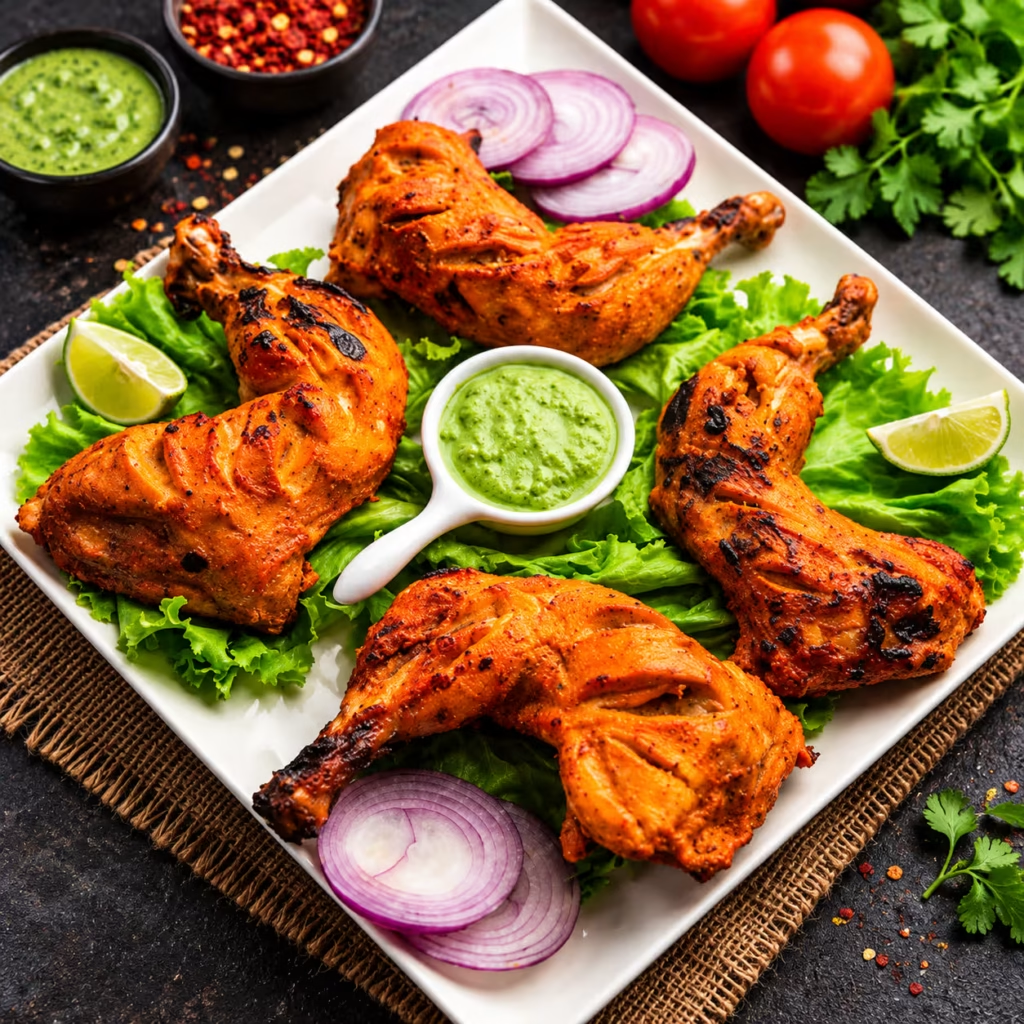
Tandoori Chicken
Chicken cooked using a tandoor after marination.
Pulao
Rice cooked with meat, stock and aromatic spices.
Each dish uses different ingredients and techniques, demonstrating the diversity within Punjabi food culture.
What Makes Punjabi Chicken Karahi Distinctive?
Several features help define the dish:
- Fresh tomato-based masala
- Ginger and garlic
- Green chilies
- High-heat cooking
- Concentrated sauce
- Fresh coriander
- Aromatic spices
- Serving with naan or roti
No single ingredient is responsible for the entire identity.
The combination and cooking technique are what make the dish recognizable.
Frequently Asked Questions About Punjabi Chicken Karahi
What is Punjabi chicken karahi?
Punjabi chicken karahi is a Pakistani chicken dish cooked in a karahi-style vessel with tomatoes, ginger, garlic, green chilies and aromatic spices. It typically has a thick, concentrated masala rather than a thin gravy.
Is Punjabi chicken karahi a Pakistani dish?
Yes. Chicken karahi is an established dish in Pakistani cuisine, with Punjabi households and restaurants having their own variations.
Is Punjabi chicken karahi very spicy?
It can be spicy, but the heat level varies. Green chilies and red chili can be adjusted according to preference.
What makes Punjabi chicken karahi different from chicken curry?
Karahi generally has a thicker, more concentrated tomato masala and is often cooked over relatively high heat. Chicken curry usually contains more liquid gravy.
Does Punjabi chicken karahi contain tomatoes?
Fresh tomatoes are a major ingredient in many Punjabi-style chicken karahi preparations.
Does chicken karahi contain onions?
Some versions do, while others focus primarily on tomatoes, ginger, garlic and green chilies.
Can yogurt be added to chicken karahi?
Some variations use yogurt, but it is not essential to every Punjabi-style preparation.
What chicken is best for karahi?
Bone-in chicken can provide rich flavor, while boneless chicken is convenient and cooks relatively quickly.
What is chicken karahi served with?
Naan, roti and tandoori roti are common choices. Salad, raita, pickles and lemon can also accompany the dish.
Why is my chicken karahi watery?
The most common causes are excess water, watery tomatoes or insufficient reduction. Cooking the tomato mixture longer can help concentrate the masala.
Why is my chicken karahi too oily?
The amount of oil can vary by recipe and restaurant style. At home, the amount can be reduced while still allowing enough fat to cook the ingredients effectively.
Can chicken karahi be made without green chilies?
Yes. Green chilies can be reduced or omitted for a milder version.
Can chicken karahi be made with boneless chicken?
Yes. Boneless chicken works well, particularly for quick home versions, but it should not be overcooked.
Is Punjabi chicken karahi the same as Lahori chicken karahi?
They can overlap, but the terms describe regional or stylistic variations rather than one universally standardized recipe.
Practical Tips for Better Punjabi Chicken Karahi
Use Ripe Tomatoes
They provide better flavor and natural sweetness.
Prepare Everything Before Starting
Karahi cooking can move quickly at high heat.
Use Fresh Ginger and Garlic
They provide a stronger aroma than relying entirely on dried alternatives.
Control the Heat
High heat is useful, but aromatics can burn quickly.
Reduce the Tomatoes Properly
This is one of the most important steps for a concentrated karahi.
Do Not Add Excess Water
The dish should generally remain thick rather than becoming a thin curry.
Finish With Fresh Garnishes
Ginger, coriander and green chilies add freshness.
Serve Immediately When Possible
Freshly cooked karahi has the best texture and aroma.
Punjabi Chicken Karahi as Part of the Zaiqahaus Punjabi Cuisine Cluster
This page should function as an informational hub page within your Punjabi Cuisine structure.
Recommended content journey:
Pakistani Cuisine
↓
Punjabi Cuisine
↓
Punjabi Chicken Karahi
↓
Chicken Karahi Recipe
The page can naturally link to:
- Punjabi Cuisine hub
- Traditional Pakistani Dishes
- Karahi Recipes
- Chicken Recipes
- Chicken Karahi recipe
- Pakistani Spices
- Punjabi Food Culture
- Punjabi Home Cooking
The broad informational page explains the dish, culture, characteristics, variations and cooking principles, while the dedicated recipe page should contain the exact ingredient quantities, preparation time, cooking time, instructions and Recipe structured data.
Punjabi Chicken Karahi and the Broader Pakistani Food Tradition
Chicken karahi demonstrates how Pakistani cuisine combines fresh ingredients with cooking technique.
The basic ingredients are relatively familiar:
- Chicken
- Tomatoes
- Ginger
- Garlic
- Chilies
- Spices
Yet the final dish depends heavily on how those ingredients are handled.
Fresh tomatoes must be reduced.
Chicken must be cooked without becoming dry.
Ginger and garlic must be fragrant without burning.
Spices must support rather than overpower the fresh ingredients.
This combination of ingredients and technique is what gives karahi its identity.
Final Thoughts
Punjabi chicken karahi is a flavorful expression of Pakistani and Punjabi food culture, built around chicken, fresh tomatoes, ginger, garlic, green chilies and aromatic spices.
Its defining characteristic is not simply the ingredients but the way they are cooked.
High-heat cooking, tomato reduction and careful control of moisture create the concentrated masala that distinguishes karahi from a conventional chicken curry.
At the same time, there is no single formula that every Punjabi household or restaurant follows. Some versions use onions, others emphasize tomatoes; some are fiery, while others are relatively mild; some use bone-in chicken, while others use boneless pieces.
That flexibility is part of the strength of traditional Punjabi home cooking.
Served with naan, roti, fresh salad, raita or pickles, Punjabi chicken karahi becomes more than a standalone dish. It becomes part of a shared meal and a wider food culture built around hospitality, family and bold but balanced flavors.